| Valve Design |
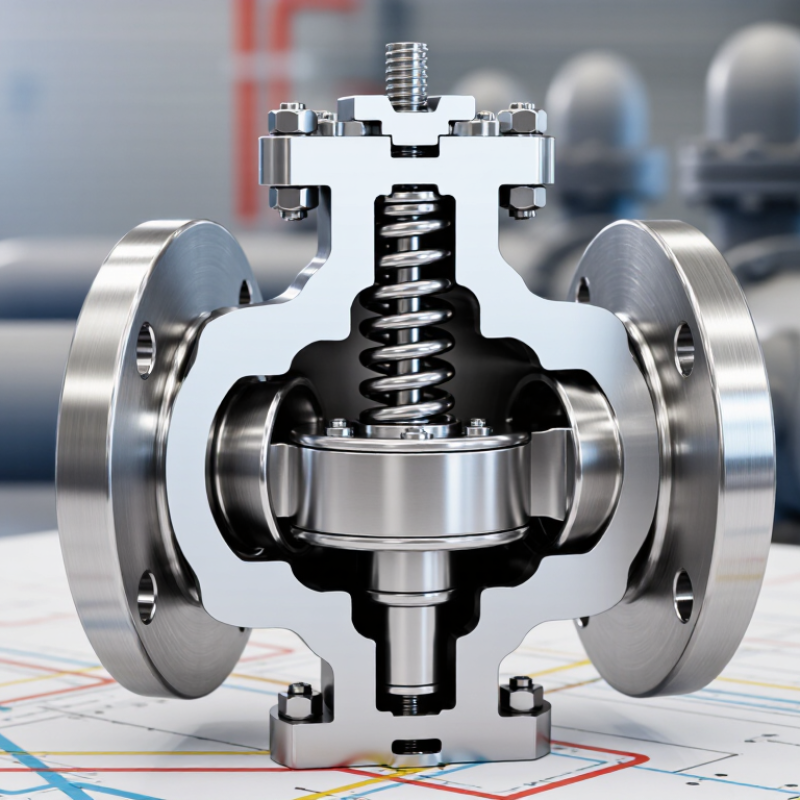
Inline axial spring check valve |
Usually DN15–DN100; wafer, threaded, socket-weld, or flanged versions; flow passes through the valve in a straight path. |
Compact length, low mass, quick closing, and good suitability for preventing reverse flow near pumps and compressors. |
The spring creates a pressure drop; cracking pressure must be checked against the available system pressure. |
Water, compressed air, gas, chemical lines, pump discharge, and space-limited piping. |
| Y-pattern spring check valve |
Commonly available in threaded or flanged construction; the disc and spring are arranged at an angle to the main flow path. |
Can provide a more serviceable layout and may accommodate robust internal components. |
Requires more installation space and may have a greater face-to-face dimension than an inline design. |
Industrial liquid, steam, gas, and process piping where access and serviceability are important. |
| Spring-loaded wafer check valve |
Typically installed between flanges; common nominal sizes range from approximately DN50 to DN300, depending on design. |
Short face-to-face length, low weight, and economical installation in larger pipe systems. |
Requires compatible flange alignment and adequate downstream clearance; sealing performance depends on correct installation. |
HVAC, water treatment, utility piping, cooling-water systems, and general industrial services. |
| Spring-assisted ball check valve |
Usually used in smaller sizes, often DN15–DN80; the spring pushes a ball against the seat when flow stops. |
Simple mechanism, good sealing capability, and tolerance of some dirty or viscous fluids when correctly selected. |
May have higher pressure loss; ball and seat materials must be compatible with the fluid and solids content. |
Dosing systems, wastewater, low-flow piping, pumps, and fluid-handling equipment. |
| Body Material |
Stainless steel, such as 316/316L |
Good general resistance to water, many mildly corrosive chemicals, and hygienic services; temperature and pressure ratings remain design-specific. |
Strong corrosion resistance, good mechanical strength, and broad industrial availability. |
Not resistant to every chemical; chloride-rich environments can cause pitting or stress-corrosion problems under certain conditions. |
Water, food and beverage utilities, chemical processing, pharmaceutical support systems, and marine-adjacent services. |
| Carbon steel |
Suitable for many non-corrosive liquid, gas, oil, and steam services when corrosion protection is provided where needed. |
High strength, broad pressure-class availability, and typically lower material cost than stainless steel. |
Requires corrosion control; unsuitable for many aggressive or oxygen-rich services without specific engineering approval. |
Oil and gas utilities, steam, compressed gas, boilers, and general industrial pipelines. |
| Ductile iron |
Common in water and HVAC systems; often supplied with an internal coating or corrosion-resistant trim. |
Cost-effective, strong for its weight, and widely used in moderate-pressure water distribution. |
Coating, water chemistry, temperature, and external corrosion must be evaluated; not a universal chemical-service material. |
Municipal water, chilled water, fire-protection systems, and building services. |
| Bronze or brass |
Frequently used for small threaded valves in potable water, plumbing, and low-to-moderate pressure services. |
Good machinability, practical cost, and suitable corrosion resistance in many water applications. |
Check dezincification resistance, fluid compatibility, temperature rating, and restrictions related to potable water regulations. |
Plumbing, domestic water, instrumentation, air, and small equipment connections. |
| Seat and Seal Material |
Metal seat |
Common for higher-temperature, steam, and demanding industrial services; exact temperature limit depends on alloy and design. |
Good temperature capability, durability, and resistance to extrusion or deformation. |
May provide less bubble-tight sealing than a soft seat and can be more sensitive to surface damage or contamination. |
Steam, hot oil, high-temperature gas, and severe industrial services. |
| EPDM elastomer |
Often selected for water, glycol-based fluids, and many dilute aqueous services; generally unsuitable for petroleum oils. |
Good water, ozone, and weather resistance with effective low-pressure sealing. |
Temperature, chemical compatibility, and oil resistance must be verified from the service conditions. |
Potable water, HVAC, cooling water, and water-treatment equipment. |
| NBR or FKM elastomer |
NBR is commonly used with oils and fuels; FKM generally offers better high-temperature and chemical resistance than NBR. |
Useful for hydrocarbon service and selected chemical applications when compound compatibility is confirmed. |
Neither material is suitable for every fluid; low-temperature flexibility, steam exposure, and chemical concentration require review. |
Fuel, lubricating oil, hydraulic systems, and selected process-fluid applications. |
| Connection Type |
Threaded connection |
Common in small nominal sizes; thread standards may include NPT, BSPP, or BSPT, which are not interchangeable without confirmation. |
Compact, easy to install, and practical for maintenance or equipment connections. |
Thread sealing and alignment are important; repeated disassembly may damage threads or sealing surfaces. |
Plumbing, instrumentation, compressors, pumps, and small process lines. |
| Flanged connection |
Available across a wide size range; flange drilling, pressure class, gasket type, and facing must match the connected piping. |
Reliable for larger pipelines, easier alignment than large threaded connections, and suitable for frequent maintenance. |
Heavier and longer than many wafer or threaded alternatives; bolts must be tightened using the correct sequence and torque. |
Water treatment, industrial utilities, process piping, steam, and pump discharge lines. |
| Socket-weld or butt-weld connection |
Used where a permanent, compact, and high-integrity connection is preferred; welding procedure must suit the valve materials. |
Strong connection, low external leakage risk, and good suitability for high-pressure or high-temperature piping. |
Removal is difficult; the valve may need protection from welding heat, contamination, and thermal distortion. |
High-pressure process lines, steam, hydrocarbons, and compact industrial piping. |
| Nominal Size Selection |
Small bore: DN15–DN50 |
Often available with threaded, socket-weld, or compact flanged ends; commonly used on equipment branches and utility lines. |
Compact and economical for low-to-moderate flow rates. |
Small passages can experience comparatively high pressure loss if the valve is undersized or the spring is too strong. |
Instrumentation, dosing, compressors, small pumps, and building services. |
| Medium bore: DN65–DN150 |
Flanged, wafer, and selected inline designs are common; flow capacity and pressure drop should be checked using the valve curve. |
Broad design availability for industrial and commercial piping. |
Pipe size alone does not determine suitability; actual flow rate, velocity, fluid density, and spring cracking pressure are required. |
Pump systems, HVAC, water treatment, process utilities, and compressed-gas systems. |
| Large bore: DN200 and above |
Wafer, dual-plate, or large flanged check-valve designs are more common than compact inline spring valves. |
Suitable for high flow capacity with relatively short face-to-face dimensions in wafer configurations. |
Higher purchase and installation costs; pipe support, disc clearance, surge behavior, and maintenance access require attention. |
Municipal water, cooling-water networks, industrial utilities, and large pump systems. |
| Pressure and Flow |
Cracking pressure |
The minimum upstream-to-downstream differential pressure required to start opening the valve; common spring options may range from about 0.03 to 0.5 bar, depending on size and design. |
A correctly selected spring helps prevent reverse flow while allowing the valve to open at the required operating pressure. |
A cracking pressure that is too high can restrict flow or prevent opening in low-pressure systems. |
Gravity-fed lines, low-pressure pumps, compressors, and process systems with limited differential pressure. |
| Pressure drop |
Depends on valve geometry, spring force, flow rate, fluid viscosity, and effective flow area; use the manufacturer’s pressure-drop or Cv/Kv data. |
Proper sizing can reduce pumping energy and improve system capacity. |
A valve with the same nominal pipe size can have a significantly different pressure drop from another design. |
All liquid and gas systems, especially high-flow or energy-sensitive installations. |
| Water hammer and dynamic response |
Spring-loaded valves generally close as flow decreases, but the actual transient response depends on mass, spring rate, piping length, velocity, and pump operation. |
Fast closing can reduce reverse-flow distance and help limit some surge events. |
A spring valve is not a complete water-hammer solution; transient analysis may be necessary for critical systems. |
Long pipelines, vertical risers, pump discharge, and systems with frequent start-stop cycles. |
| Installation Direction |
Horizontal installation |
Usually acceptable for inline spring designs when the flow arrow and piping alignment match the installation instructions. |
Suitable for most general piping layouts. |
Verify minimum upstream straight length and avoid excessive vibration or unsupported pipe loads. |
General industrial, utility, water, air, and gas services. |
| Vertical installation |
Confirm whether upward or downward flow is permitted; spring-loaded inline valves are often more flexible than gravity-dependent swing checks. |
Can be installed in risers when the selected design supports the intended flow direction. |
Incorrect orientation can cause leakage, unstable operation, or failure to open fully. |
Vertical pump discharge, risers, drainage systems, and compact equipment piping. |
|
Selection reminder: Confirm the actual fluid, temperature, pressure, flow rate, pressure class, connection standard, installation direction, seat compatibility, and required leakage performance before finalizing a spring check valve. All ranges shown are typical industry guidance; the certified rating of the selected valve takes priority.
|



 © Copyright 2020 Tianjin Tanghaidongyang Valve Co., Ltd. All Rights Reserved.