| Flat-deck trolley | Moving bulky items, boxes, or containers between workstations. | Its open deck accommodates varied load shapes and allows straightforward loading and unloading. | Confirm deck dimensions, load restraint needs, handle position, and the rated capacity for the intended load. |
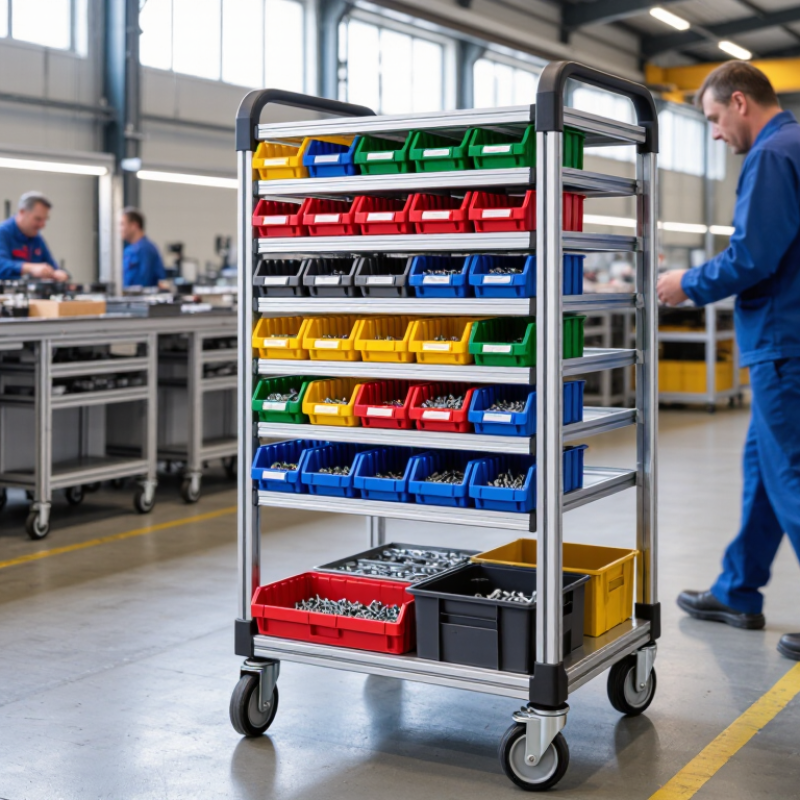
| Multi-shelf trolley | Carrying smaller parts, tools, or supplies that need to remain separated. | Shelves help organize materials and make frequently used items easier to access. | Check shelf spacing, usable shelf area, edge protection, and whether the load is evenly distributed. |
| Kit-picking trolley | Delivering grouped components to an assembly station in the order they are needed. | Dedicated bins or compartments can support organized picking and reduce searching at the workstation. | Match bin sizes and layout to the actual parts, picking sequence, and replenishment method. |
| Flow-rack trolley | Presenting totes or small containers in a first-in, first-out sequence. | Inclined roller or track lanes can help bring the next container toward the operator as one is removed. | Verify container compatibility, lane dimensions, replenishment access, and that the trolley fits the workstation. |
| Lift-table trolley | Moving loads that need to be raised or lowered to a working height. | A height-adjustable platform can help position loads for transfer or assembly tasks. | Check platform size, lifting range, rated load, operating method, and safeguards specified for the model. |
| Load capacity and load distribution | Any application where the trolley will carry parts, containers, or tools. | Choosing an appropriate rated capacity helps keep the trolley within its intended operating limits. | Compare the total expected load with the manufacturer’s rating, and follow any limits for concentrated or uneven loads. |
| Wheels, floor, and route | Routes with particular floor surfaces, thresholds, turns, or shared traffic. | Suitable wheel size and material can make pushing and maneuvering more appropriate for the route. | Assess floor condition, obstacles, turning space, noise requirements, and whether brakes are needed for parking. |
| Ergonomics and workflow | Repeated material deliveries or tasks that involve frequent reaching and handling. | A trolley configured around the work sequence can keep materials accessible and reduce unnecessary handling. | Check handle height, reach to shelves or bins, visibility, aisle clearance, and compatibility with the station layout. |


 © Copyright 2020 Tianjin Tanghaidongyang Valve Co., Ltd. All Rights Reserved.