| Machine frame and base | Rigid steel or aluminum structure with mounting plates, guards, and adjustable feet. | Supports stations and moving mechanisms while limiting vibration and maintaining alignment. | Provides the stable foundation needed for repeatable positioning and assembly. |
| Part-feeding system | May include vibratory bowl feeders, linear tracks, magazines, hoppers, or trays. | Separates and presents components in a consistent orientation for pickup or insertion. | Supplies items such as molded housings, contacts, springs, terminals, and mechanisms. |
| Indexing or transfer unit | Rotary indexing table, linear transfer track, pallet conveyor, or servo-driven shuttle. | Moves a workpiece between stations, often stopping at programmed positions for processing. | Coordinates the assembly sequence and keeps parts aligned during each operation. |
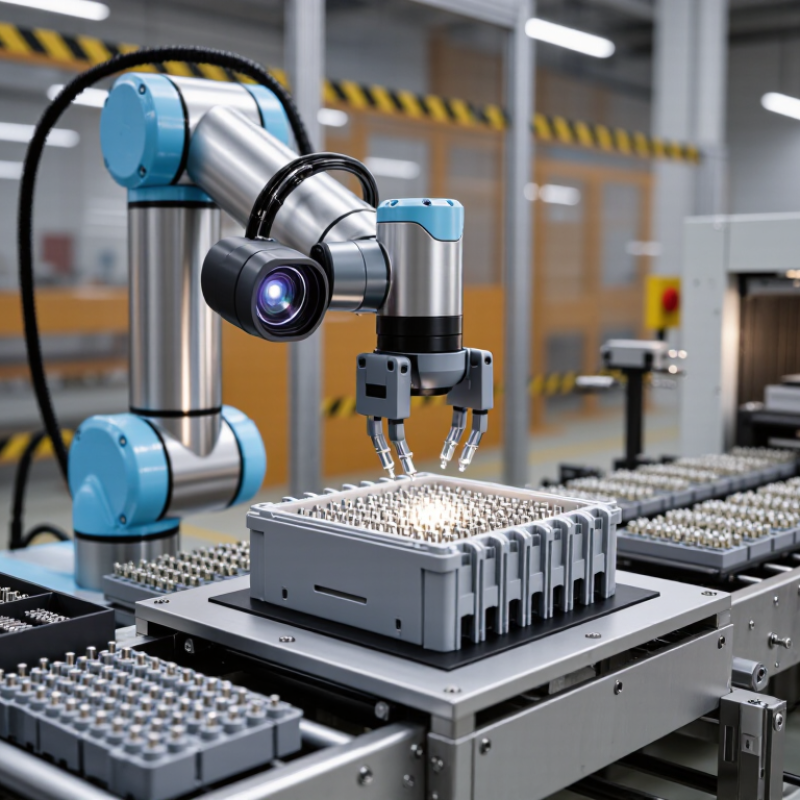
| Pick-and-place mechanism | Cartesian slide, pneumatic actuator, servo axis, or compact robotic arm fitted with a gripper. | Uses a mechanical or vacuum gripper to pick components and place them at designated locations. | Loads parts into fixtures and transfers components between feeding and assembly stations. |
| Assembly fixtures and nests | Custom-machined pockets, locating pins, clamps, and replaceable tooling inserts. | Locates and restrains the workpiece so components can be inserted or fastened accurately. | Controls part position and supports consistent assembly across production cycles. |
| Insertion and pressing unit | Guided pneumatic or servo-electric press with a punch, insertion tool, or force sensor. | Applies controlled linear motion to seat contacts, terminals, or other press-fit components. | Creates mechanical retention while helping prevent incomplete insertion or part damage. |
| Screwdriving or fastening unit | Automatic screwdriver spindle with a screw feeder, bit, and torque or angle monitoring. | Feeds and tightens fasteners according to defined process settings. | Secures components or covers where the MCB design uses screws. |
| Sensor and vision system | Photoelectric sensors, proximity switches, cameras, and, where needed, force or position sensors. | Detects part presence, orientation, position, and selected assembly features; sends signals to the controller. | Supports process checks, part verification, and fault detection before the next operation. |
| Control system | Industrial controller, operator panel, motor drives, input/output modules, and machine software. | Runs the sequence, coordinates actuators, reads sensors, and displays machine status and alarms. | Synchronizes feeding, transfer, assembly, inspection, and discharge operations. |
| Safety equipment | Fixed guards, interlocked doors, emergency-stop devices, and safety-rated control components. | Stops or restricts hazardous motion when a guard is opened or an emergency stop is activated. | Helps protect operators during setup, operation, and maintenance. |
| Inspection and discharge station | Test fixtures, sensors, reject diverters, and a conveyor or collection tray. | Checks selected assembly conditions and routes accepted or rejected units to separate outputs. | Provides a final process check and organizes completed MCBs for the next production step. |


 © Copyright 2020 Tianjin Tanghaidongyang Valve Co., Ltd. All Rights Reserved.