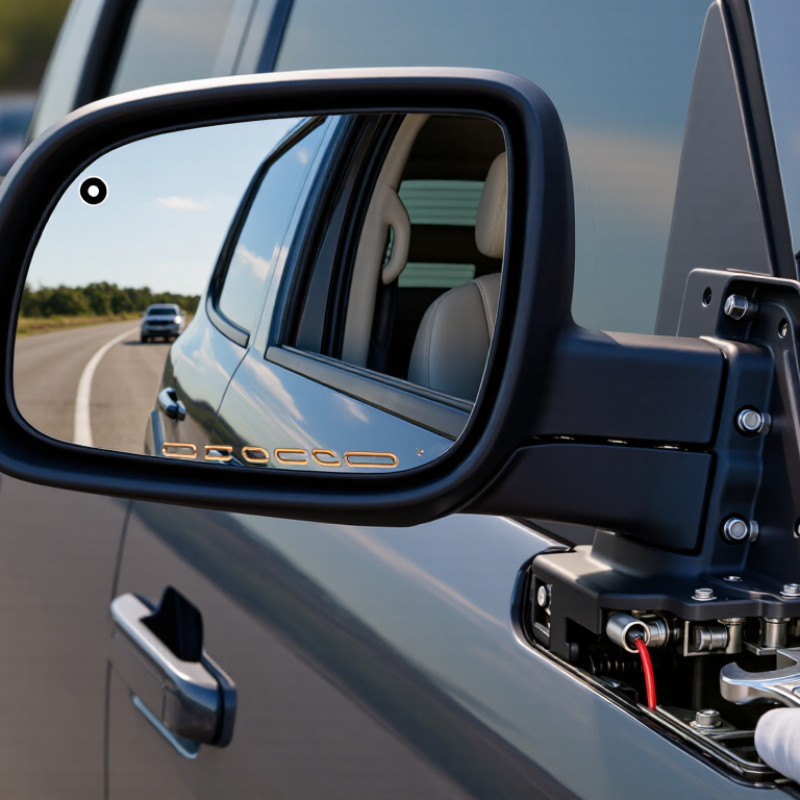
A side mirror gives the driver a wider view beside and slightly behind the vehicle. It helps reveal nearby cars, cyclists, parking lines, and blind spots. Modern side mirrors may include manual or electric adjustment, folding hinges, heating elements, turn signals, and blind-spot warning displays. Features vary by vehicle and equipment level, so checking the owner’s manual remains the most reliable approach.
Adjust the mirror while sitting in the normal driving position. Keep only a narrow strip of the vehicle’s side visible. The remaining glass should show the adjacent lane and nearby traffic. This setup reduces overlap between the inside mirror and side mirrors, though no adjustment removes every blind spot. Turn your head before changing lanes.
Electric controls usually move the glass horizontally and vertically with small switch inputs. Heated glass can clear light frost, mist, or rain, but it does not replace careful cleaning. Foldable mirrors are useful in tight parking areas. Move them gently if folding by hand; forcing a stiff hinge may cause damage. I have found that drivers often aim the mirror too far inward. That feels familiar, but it limits useful road coverage.
Check the mirror surface after washing or loading the vehicle. A loose housing, cracked glass, or delayed adjustment deserves prompt inspection. Blind-spot alerts can support awareness, yet they may miss small objects, fast traffic, or poor-weather conditions. Use them as assistance, not as your only decision tool.



 © Copyright 2020 Tianjin Tanghaidongyang Valve Co., Ltd. All Rights Reserved.