| Portable Angle Grinder | Flap discs, grinding discs and fiber discs | Disc diameter: 100–230 mm | 700–2,600 W | Weld blending, edge preparation, rust removal and localized surface finishing | Variable-speed control, spindle-lock design, low-vibration handle, overload protection and disc guard adjustment | Use a compatible extraction shroud where available; sparks require a controlled work area and fire-resistant surroundings | Confirm disc compatibility, operating speed, electrical plug, local voltage, duty cycle and operator safety requirements |
| Portable Belt Sander | Abrasive belts | Belt width: 20–75 mm | 500–1,500 W | Linear weld removal, deburring and finishing on tubes, profiles and narrow flat surfaces | Adjustable sanding arm, belt-tracking system, quick belt change, variable speed and ergonomic grip | Integrated dust port is useful for dry sanding; metal sparks must be isolated from combustible dust and materials | Check arm reach, minimum contact radius, belt availability, tracking stability and replacement-belt cost |
| Stationary Belt and Disc Sander | Endless belts and coated abrasive discs | Belt width: 50–150 mm; disc diameter: 150–300 mm | 750–2,200 W | Small-batch deburring, shaping, weld cleanup and general workshop metal finishing | Rigid work table, adjustable mitre guide, emergency stop, stable base, replaceable platen and accessible controls | Extraction port and spark-resistant collection arrangement should be evaluated; avoid mixing metal dust with combustible dust | Verify table angle range, belt speed, abrasive replacement procedure, guarding and available floor space |
| Tube and Pipe Belt Grinder | Narrow abrasive belts | Tube diameter: approximately 20–120 mm | 1,200–2,500 W | Tube notching, polishing, satin finishing and circumferential weld preparation | Adjustable contact arm, controlled belt tension, variable speed, consistent wrap angle and quick-change tooling | Extraction support depends on the contact-arm design; use spark containment and suitable ventilation | Check supported tube diameter, minimum radius, belt dimensions, finish consistency and replacement contact wheels |
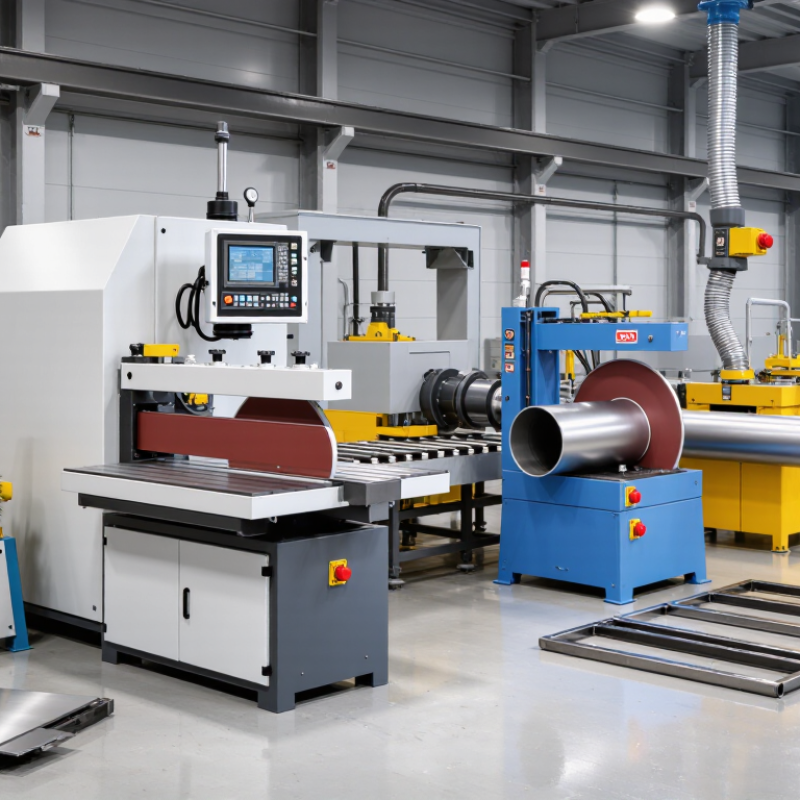
| Wide-Belt Metal Finishing Machine | Wide abrasive belts, brush heads or nonwoven belts | Working width: 600–1,350 mm; thickness: often 0.5–120 mm | Approximately 15–75 kW total installed power | High-volume deburring, edge rounding, oxide removal, weld leveling and uniform finishing of sheet metal | Automatic thickness setting, abrasive-belt monitoring, feed-speed control, multiple sanding heads and calibrated pressure rollers | Dedicated wet or dry filtration may be required; the extraction system should match metal type and abrasive process | Compare line speed, usable width, minimum and maximum workpiece thickness, head configuration, installation space and service access |
| Long-Belt Sanding Machine | Long abrasive belts | Working width: commonly 600–1,300 mm | Approximately 3–15 kW | Large fabricated parts, stainless-steel panels, weld smoothing and manual finishing of oversized workpieces | Large sanding table, adjustable belt tracking, robust platen, variable belt speed and clear work-area visibility | Central extraction is recommended; sparks and hot particles should be directed away from filters and combustible surfaces | Assess table dimensions, belt replacement time, operator access, abrasive tensioning and available overhead clearance |
| Centerless Through-Feed Grinder | Grinding wheel and regulating wheel | Round stock diameter: commonly 1–150 mm, depending on configuration | Approximately 10–100 kW | Continuous cylindrical finishing of bars, shafts, pins and other round metal components | Through-feed or plunge-feed capability, adjustable work-rest blade, wheel dressing system and precise feed control | Wet coolant filtration is commonly used for production grinding; enclosure and mist control should be included | Confirm diameter range, roundness tolerance, throughput, wheel dimensions, dressing method and coolant-management requirements |
| Robotic or CNC Abrasive Finishing Cell | Abrasive belts, discs, wheels or brushes | Work envelope varies; commonly 500–2,000 mm reach | Spindle or tool power: approximately 1–15 kW | Repeatable weld finishing, deburring and surface preparation for complex or high-volume components | Force control, programmable tool paths, automatic tool changing, part fixturing, collision detection and process monitoring | Fully enclosed guarding with interlocks and engineered extraction is normally required for production use | Evaluate cycle time, programming requirements, fixture flexibility, integration with existing equipment and operator training |


 © Copyright 2020 Tianjin Tanghaidongyang Valve Co., Ltd. All Rights Reserved.