| Machine Definition | A woodworking machine designed to cut straight grooves, slots, channels, or rebates in chipboard and similar panel materials. | Supports furniture assembly, cabinet construction, shelving, drawer components, and panel-joining applications. | The machine should be selected according to panel thickness, slot dimensions, production volume, and required accuracy. |
| Common Workpiece Materials | Plain chipboard, melamine-faced chipboard, laminated particleboard, MDF, plywood, and some composite panels. | Different materials can be processed with suitable cutters, cutting speeds, clamping methods, and dust extraction. | Melamine and laminated surfaces require sharp, suitable tooling to reduce chipping and edge damage. |
| Main Slotting Operations | Longitudinal slots, cross slots, T-slots, back-panel grooves, dadoes, edge grooves, and shallow rebates. | These operations allow panels to interlock or receive shelves, backs, dividers, fittings, and hardware. | The cutter profile and machine travel must match the required slot geometry. |
| Typical Panel Thickness | Approximately 6–40 mm for many woodworking applications; the actual range depends on machine design. | Covers common furniture panels, shelving boards, cabinet sides, and back-panel materials. | Confirm the maximum workpiece thickness and the available vertical or horizontal adjustment before purchase. |
| Typical Slot Width | Common production requirements are approximately 3–12 mm, although wider or custom slots are possible with appropriate tooling. | Slot width determines the fit of shelves, joining components, spline materials, and back panels. | The cutter diameter, kerf, and material compression must be considered to achieve the intended fit. |
| Typical Slot Depth | Often approximately 2–15 mm for furniture-related grooves, subject to panel thickness and structural requirements. | Controls joint engagement and helps prevent cutting through the panel. | The depth should be adjusted to preserve sufficient remaining panel thickness and surface integrity. |
| Machine Configuration | Available formats include manual, semi-automatic, automatic, vertical, horizontal, single-spindle, multi-spindle, and CNC-controlled systems. | Configuration affects setup time, repeatability, labor requirements, and production capacity. | CNC systems are useful for variable patterns, while dedicated machines can be efficient for repetitive slotting. |
| Spindle Speed | High-speed woodworking spindles commonly operate within roughly 12,000–24,000 revolutions per minute, depending on the cutter and machine. | Suitable speed helps balance cutting quality, tool life, noise, heat generation, and productivity. | Always follow the cutter manufacturer’s maximum speed and recommended cutting parameters. |
| Feed Rate | A broad woodworking range is approximately 3–20 m/min, depending on material, cutter diameter, spindle power, and surface requirements. | Feed rate influences throughput, edge quality, cutting force, and the risk of burning or chipping. | Use lower starting values for laminated surfaces or unfamiliar materials, then optimize through testing. |
| Positioning Accuracy | CNC machines may commonly target approximately ±0.05–0.20 mm positioning accuracy; actual cutting accuracy depends on the complete system. | Accurate positioning improves joint consistency and interchangeability between panels. | Machine rigidity, calibration, tooling condition, panel tolerances, and environmental factors also affect results. |
| Workholding Method | Common methods include mechanical clamps, pressure beams, stops, fixtures, and vacuum tables. | Stable workholding reduces vibration, movement, dimensional errors, and surface damage. | Vacuum or automated clamping is useful for repeat production, while mechanical fixtures may suit smaller batches. |
| Cutting Tools | Carbide-tipped straight cutters, slotting saws, compression cutters, and specialized profile tools are commonly used. | Tool selection affects slot dimensions, edge finish, service life, and resistance to chipping. | Choose a tool suitable for abrasive particleboard and the presence of decorative laminates. |
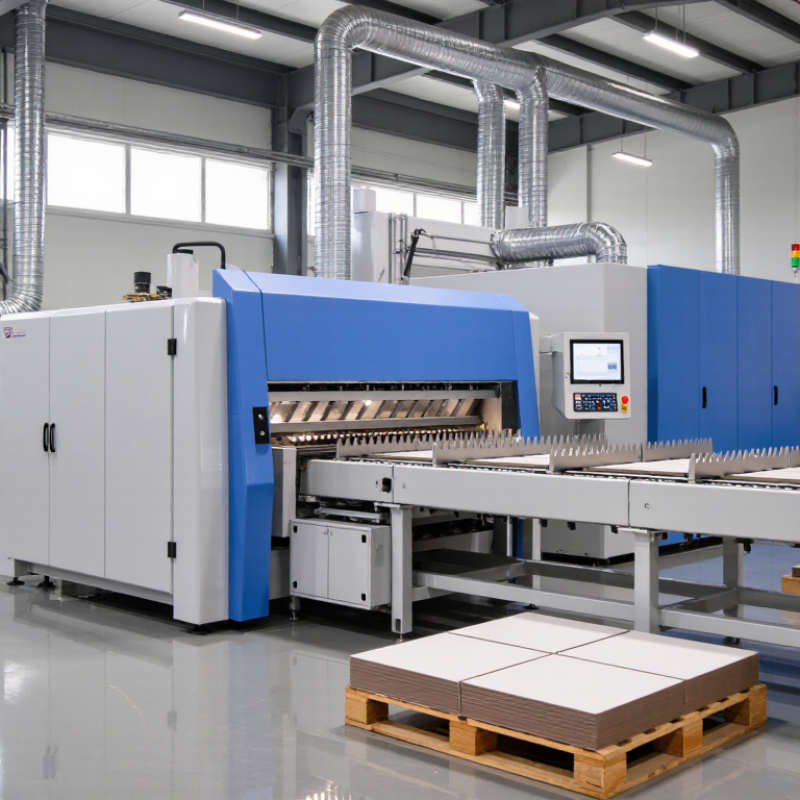
| Dust Extraction | A dedicated dust-collection system is normally required because chipboard machining produces fine wood and resin particles. | Effective extraction improves visibility, surface quality, equipment cleanliness, and workplace air quality. | Extraction capacity, hose diameter, filter maintenance, and enclosure design should be checked as a complete system. |
| Production Suitability | Manual machines suit low-volume or flexible work; automatic and CNC machines suit repeatable medium- and high-volume production. | The correct automation level can reduce setup time, operator workload, and material handling effort. | Evaluate cycle time, changeover frequency, operator skill, floor space, and integration with other equipment. |
| Safety Requirements | Important features include guarding, emergency stops, interlocks, secure clamping, dust control, and safe tool-changing procedures. | Proper safeguards help reduce risks from rotating tools, ejected particles, noise, dust, and unexpected machine movement. | Operators should receive training and follow applicable workplace safety regulations and maintenance procedures. |



 © Copyright 2020 Tianjin Tanghaidongyang Valve Co., Ltd. All Rights Reserved.