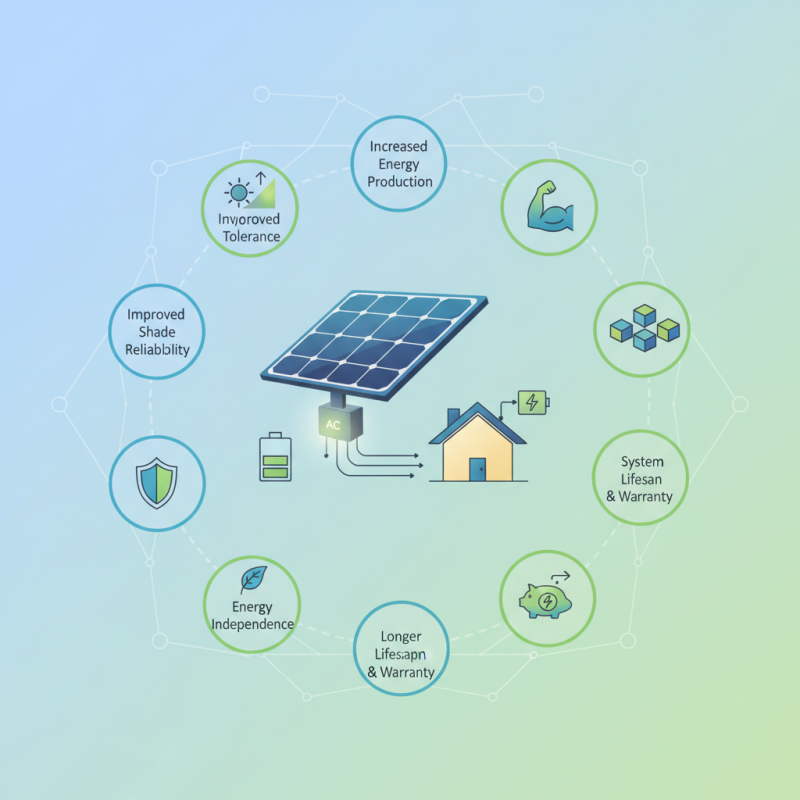
| Enhanced Performance in Shading | Microinverters allow each panel to operate independently, optimizing output even when shaded. | Increased energy yield compared to string inverters in partially shaded conditions. |
| Greater System Flexibility | Easier to expand or reconfigure systems without affecting overall performance. | Facilitates optimal energy harvesting from additional panels. |
| Improved Monitoring and Diagnostics | Each microinverter can be monitored individually, allowing for quick identification of issues. | Maximizes energy production by maintaining system health. |
| Higher Energy Conversion Efficiency | Microinverters typically have higher conversion efficiencies than traditional inverters. | Enhances overall energy yield from the solar array. |
| Simplified Installation | Less complex wiring reduces installation time and costs. | Allows for quicker realization of energy savings. |
| Greater Resilience to Temperature Variations | Microinverters maintain efficiency better in extreme temperatures. | Optimizes energy harvesting across various climatic conditions. |
| Reduced Risk of System Failures | Failure of one microinverter does not impact the entire system. | Increases overall energy output by minimizing downtime. |
| Enhanced Aesthetics | Microinverters can be installed on the back of panels, improving visual appeal. | Encourages solar adoption without compromising home aesthetics. |
| Better Long-Term Savings | Higher initial cost offsets potential long-term savings through increased energy production. | Maximizes financial returns over the lifespan of the system. |
| Seamless Integration with Smart Technologies | Works well with smart home technologies and energy management systems. | Enhances energy savings through optimized usage. |
 © Copyright 2020 Tianjin Tanghaidongyang Valve Co., Ltd. All Rights Reserved.