China Top 10 Overlay Welded Pipe Manufacturers
China has become a major source of industrial pipe solutions for energy, chemical processing, mining, and water infrastructure. This article introduces ten notable Chinese manufacturers associated with Overlay Welded Pipe production and project supply. The selection considers manufacturing capability, engineering experience, quality systems, and export performance.
In practice, reliable overlay welding depends on more than attractive brochures. It requires controlled heat input, compatible cladding alloys, stable dilution rates, and accurate pipe dimensions. Manufacturers should demonstrate experience with stainless steel, nickel-based alloys, duplex grades, or other corrosion-resistant materials. Important evidence may include welding procedure qualifications, non-destructive testing records, hydrostatic test results, material certificates, and complete product traceability. Factory audits can also reveal details that websites rarely show.
Not every supplier fits every project.
The following overview compares production equipment, technical services, inspection practices, delivery capacity, and typical application fields. It also considers how manufacturers respond to customized wall thicknesses, internal diameters, welding standards, and demanding operating temperatures. However, a ranking is never perfectly permanent. Public information can change, and some capable regional manufacturers receive limited international exposure. Buyers should verify certifications, recent project references, sample reports, and after-sales support before making a final decision. This cautious approach supports more reliable procurement and reduces risks linked to inconsistent bonding, dimensional errors, or incomplete documentation. The goal is practical guidance, not an unquestionable verdict.
What Is Overlay Welded Pipe and Where Is It Used?
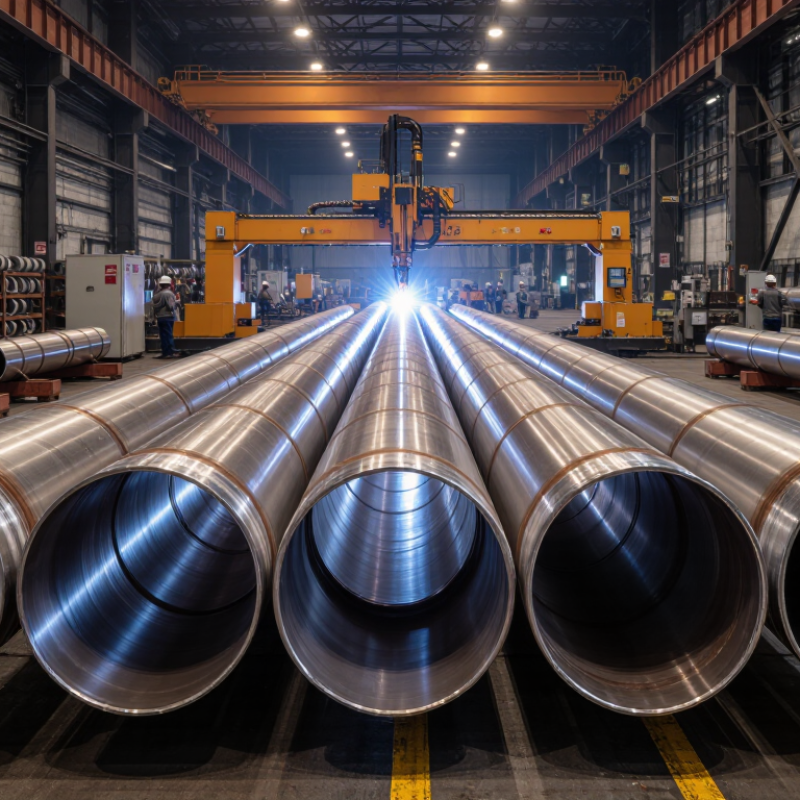
Overlay welded pipe combines a strong carbon-steel pipe with a welded alloy layer on its internal or external surface. The base pipe carries pressure. The overlay resists corrosion, erosion, heat, or chemical attack. It is not simply a thicker pipe. The welding process needs controlled heat input, dilution, and inspection.
The NACE IMPACT study estimated global corrosion costs at about US$2.5 trillion annually, equal to roughly 3.4% of global economic output. This explains the demand for cladded pipe in refineries, chemical plants, power stations, and offshore flowlines. In mining, abrasive slurry can rapidly wear ordinary steel. Nickel alloys, stainless steels, and chromium-rich layers can extend service life, though no overlay fits every fluid.
Water infrastructure is another practical field. The United Nations World Water Development Report states that agriculture represents about 70% of global freshwater withdrawals. Irrigation and treatment systems therefore need dependable pipelines, especially where water contains salts or suspended solids. Engineers usually check temperature, pressure, chloride level, flow speed, and maintenance access before choosing a weld overlay. Small errors matter. A corrosion-resistant layer may still fail through poor bonding, porosity, or unsuitable welding parameters. The term “overlay pipe” is also used inconsistently across suppliers, so drawings and inspection records should define thickness, alloy, testing, and acceptance limits clearly.
How China’s Top 10 Overlay Welded Pipe Manufacturers Are Selected
Selecting China’s top 10 overlay welded pipe manufacturers requires more than comparing online catalogs. The selection begins with practical evidence from oil, gas, mining, and process piping projects. We examine manufacturing experience, overlay methods, welding control, and documented performance. A capable manufacturer should explain its material choices clearly. It should also provide traceable heat numbers, inspection records, and production photographs.
Technical verification carries significant weight. We review welding procedures, operator qualifications, non-destructive testing, dimensional control, and corrosion-resistant alloy coverage. Factory assessments may include checking cladding thickness with ultrasonic gauges. Sample pipes are examined for surface defects, bonding quality, hardness, and chemical composition. Delivery capacity matters too. A reliable supplier must manage custom diameters, urgent batches, protective packaging, and consistent documentation.
Not every claim deserves equal trust. No ranking method is flawless. Some factories present impressive samples but offer limited evidence from long-term service. Therefore, we compare customer references, independent inspection results, and responses to technical questions. Clear communication is a practical quality indicator. Manufacturers that disclose limitations often appear more dependable than those promising everything. Pricing is considered, but it never replaces process control, material traceability, or after-sales support. The final ten are selected through weighted scoring, site observations, and repeated document checks rather than advertising visibility. Mistakes can still occur, especially when production data is incomplete, so the list should remain open to later review.
Key Technologies and Materials Used in Overlay Welding
China Top 10 Overlay Welded Pipe Manufacturers
Overlay welding protects carbon steel or alloy pipe from severe wear, corrosion, and heat. In practical production, the base pipe provides strength, while the welded layer handles the harsh service environment. Common methods include submerged arc welding, plasma transferred arc welding, and laser cladding. Each method controls heat input differently. This affects dilution, hardness, and coating consistency.
Materials must match the actual operating conditions. Nickel-based alloys resist corrosive chemicals and high temperatures. Chromium carbide layers perform well against abrasive particles. Cobalt-based alloys suit sliding wear and thermal cycling, but they require careful heat control. Stainless steel and duplex overlays can support demanding corrosion service. Skilled manufacturers check powder or wire chemistry, weld penetration, and layer thickness. Non-destructive testing, hardness testing, and metallographic checks improve reliability. Still, no process is perfect. Excessive dilution can reduce the overlay’s protective value, even when the surface looks smooth.
Tips: Confirm the fluid chemistry, temperature, pressure, and wear pattern before selecting materials. Keep heat input records for every welding pass. Inspect the transition zone, not only the visible surface. A small crack matters. In my experience, rushed repairs often begin with incomplete service data. Engineers should also review preheating, interpass temperature, and post-weld treatment. These details may seem minor, but they strongly influence pipe life.
How to Compare and Choose a Suitable Chinese Manufacturer
China Top 10 Overlay Welded Pipe Manufacturers
Comparing ten Chinese overlay welded pipe manufacturers requires more than reading product catalogs. Start with the alloy, pipe grade, diameter, wall thickness, and service temperature. A supplier experienced with nickel-based overlays may not suit abrasive slurry lines. Request welding procedures, qualification records, and recent inspection reports. Look for documented control of dilution, porosity, hardness, and overlay thickness.
Factory evidence matters. Ask for a live video audit or visit the production site when possible. Check welding equipment, heat treatment areas, machining capacity, and material storage. During one supplier review, I found excellent certificates but weak traceability between plates and finished pipes. That detail changed the ranking. Ask how each manufacturer marks heat numbers, handles repairs, and protects machined surfaces before shipment. Small gaps can become expensive field problems.
Compare samples, not promises. Require a trial section with the same alloy and welding method planned for production. Independent testing can verify chemical composition, bonding strength, ultrasonic results, and dimensional tolerance. Also examine delivery records from comparable projects. A low quotation may exclude testing, packing, export documentation, or corrective work. Clarify these costs in a written specification. Communication deserves a score too. Slow replies often signal future delays, though not always. I would use a weighted comparison table, but keep room for professional judgment. Real performance data should outweigh polished presentations.
China Top 10 Overlay Welded Pipe Manufacturers: How to Compare and Choose a Suitable Chinese Manufacturer
Recommended comparison framework for screening overlay welded pipe suppliers. The percentages are buyer-planning weights, not company performance data or rankings.
How to use this chart: Prioritize welding quality, inspection traceability, material compliance, and project experience. Request verifiable evidence such as welding procedure qualifications, inspection reports, material certificates, production capacity, and export references before selecting a supplier.



 © Copyright 2020 Tianjin Tanghaidongyang Valve Co., Ltd. All Rights Reserved.