| Material designation | Ti-6Al-4V, commonly designated Grade 5; the alloy contains aluminum and vanadium as its principal alloying elements. | Confirm the order specifies Grade 5, the governing standard, product form, and required condition. |
| Applicable product standards | ASTM B348 covers titanium and titanium-alloy bars and billets. AMS 4928 is a commonly referenced aerospace specification for Ti-6Al-4V products, including bars; verify the exact scope and revision for the order. | Ask the supplier to state the standard and revision on its quotation and material certificate. Do not assume standards are interchangeable. |
| Chemical composition | For Grade 5 under ASTM B348, typical specified limits include aluminum 5.5–6.75%, vanadium 3.5–4.5%, iron maximum 0.40%, and oxygen maximum 0.20%; the specification also limits elements such as carbon, nitrogen, and hydrogen. | Request a heat-specific chemical analysis and check every element against the applicable standard, not just the nominal alloy designation. |
| Mechanical properties | Tensile, yield, and elongation requirements depend on the applicable specification, product size, and material condition. A single generic value should not be treated as a guarantee for every bar. | Check the lot-specific test results and confirm that the test condition and specimen requirements match the purchase specification. |
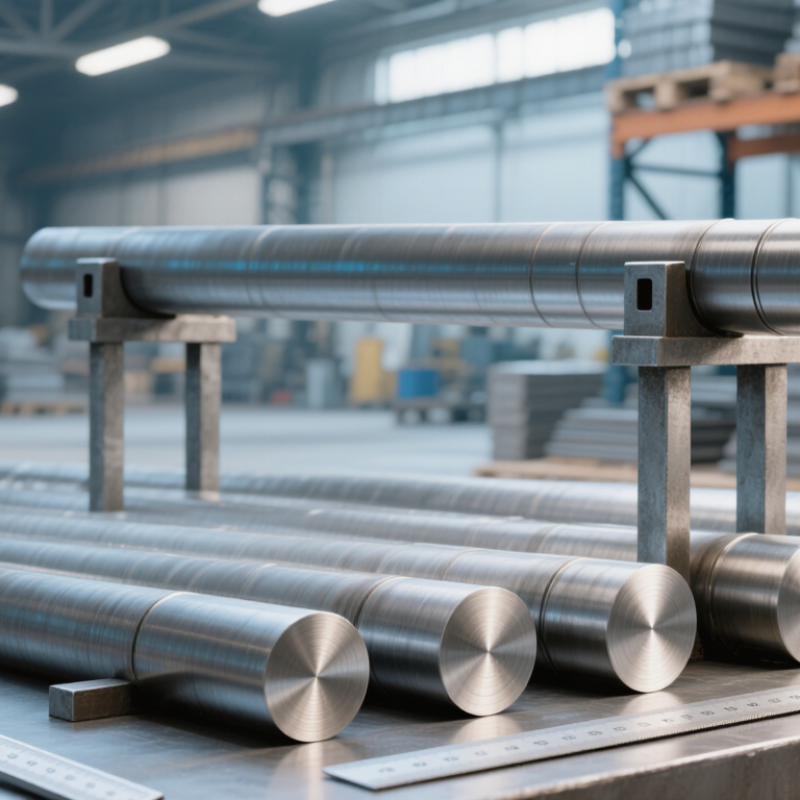
| Product range | Titanium bar is commonly supplied in round form; some suppliers can source additional shapes or provide cut-to-length stock. Available diameters, lengths, and shapes depend on mill supply and inventory. | Request a current size-and-condition list, dimensional tolerances, minimum order quantity, and confirmation of whether material is stocked or made to order. |
| Material condition and processing | Grade 5 bar can be supplied in specified conditions such as annealed, depending on the governing specification and product availability. Cutting and machining services may be offered separately. | Specify the required condition, surface finish, straightness, cut length, and any processing requirements before placing the order. |
| Traceability and inspection documents | A material test report should identify the material, heat or lot, applicable specification, and test results. EN 10204 Type 3.1 is one commonly used inspection-document format when specified. | Confirm that certificates are supplied with the shipment and that heat or lot identification remains linked to the delivered bars. |
| Quality-system certifications | ISO 9001 is a general quality-management standard; AS9100 is used in the aerospace sector, and ISO 13485 is used for medical-device quality management. These certifications concern management systems and do not by themselves certify a particular bar shipment. | If certification is required, verify the current certificate, its scope, site, and validity. Separately verify product conformance and shipment documentation. |
| Grade 5 versus Grade 23 | Grade 23 is Ti-6Al-4V ELI (extra-low interstitial) and has different chemistry limits from standard Grade 5. It should not be substituted for Grade 5—or vice versa—without approval. | Check the full grade designation and interstitial-element requirements, especially for medical or other tightly controlled applications. |
| Basic material property | The commonly reported density of Ti-6Al-4V is approximately 4.43 g/cm³; actual design calculations should use the applicable engineering data and specifications. | Use the property as a reference, not as a substitute for design allowables or certified material data. |



 © Copyright 2020 Tianjin Tanghaidongyang Valve Co., Ltd. All Rights Reserved.