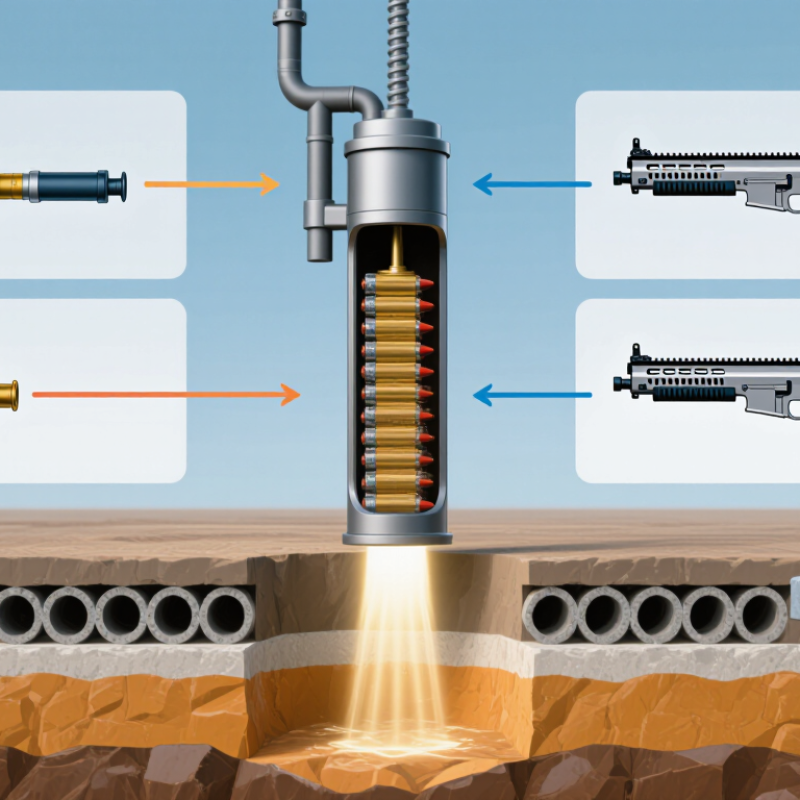
In a TCP perforating gun, the firing sequence starts when the approved surface command reaches the downhole initiation system. A firing head responds to the selected signal, then transfers energy to a detonator and the detonating cord. The cord carries the event along the gun, initiating the shaped charges. Their metal liners collapse into high-speed jets, creating small passages through casing and cement into the formation. The sequence is rapid, but each connection matters. A weak link can prevent the intended shot pattern.
The details are measurable. API Recommended Practice 19B evaluates perforator performance using controlled target tests; its concrete-target procedure uses a target in the 5,000-psi compressive-strength class and records penetration results. SPE technical literature also describes how charge design and well conditions affect tunnel geometry and flow.
These are test conditions, not a guarantee of identical downhole results. Temperature, pressure, gun positioning, and casing condition can change performance. Small differences matter.
Operators therefore verify system compatibility, electrical continuity where applicable, and arming status under approved procedures before deployment. It is easy to treat initiation as a simple trigger. That is probably an oversimplification.
API RP 67 further emphasizes controlled handling and safety practices for oilfield explosives.


 © Copyright 2020 Tianjin Tanghaidongyang Valve Co., Ltd. All Rights Reserved.