How to Choose the Right Spare Tire?
Choosing the right Spare Tire is more complicated than matching a wheel to your vehicle. Size, bolt pattern, load rating, speed rating, and clearance all matter. A tire that looks suitable may still damage the brakes or affect handling.
John Nielsen, former managing director of automotive engineering at AAA, has warned, “A spare tire is not meant to be driven on indefinitely.” That advice deserves attention. A compact temporary spare can save space and fuel, but it usually has a lower speed limit and shorter driving range. A full-size spare offers more stability, although it may require additional storage room. Run-flat tires create another option, yet they still need careful inspection after a puncture.
Check your owner’s manual before buying anything. Measure the existing wheel. Confirm the tire’s load capacity and inflation pressure. Inspect the spare every few months, because unused rubber still ages. The air can disappear quietly.
Experience also exposes an uncomfortable mistake: many drivers carry a spare but forget the jack, wrench, or locking-key adapter. That turns useful equipment into dead weight. I have seen people discover this beside a dark roadside, with rain entering through an open trunk. It is not a proud moment.
This guide explains how to choose a Spare Tire that fits your vehicle, driving habits, and emergency plans. The best choice may not be the cheapest one. It should be dependable, clearly labeled, and practical when conditions become inconvenient.
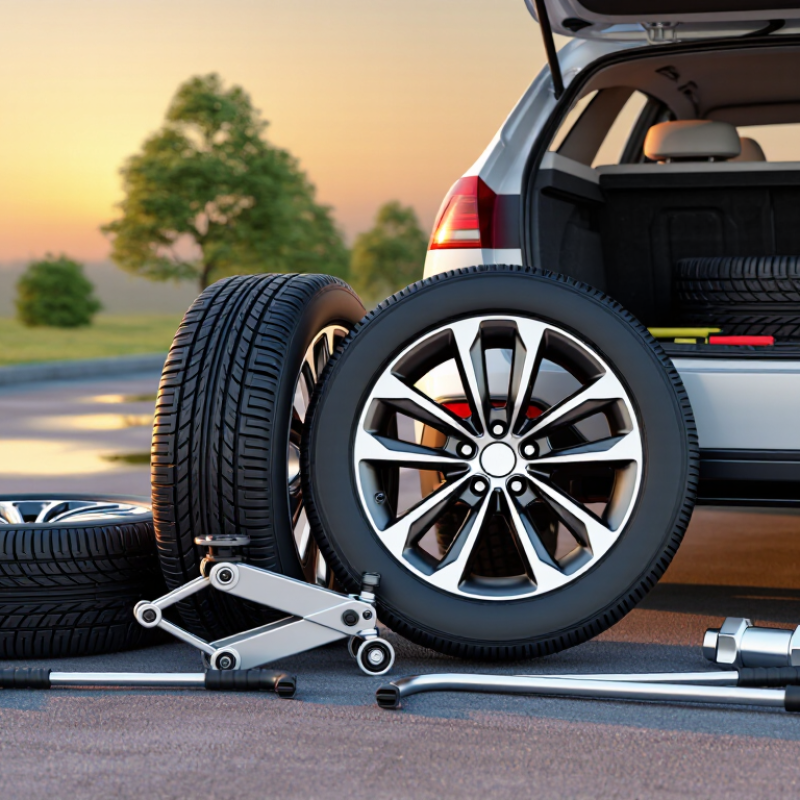
Determine Your Vehicle’s Spare Tire Requirements
How to Choose the Right Spare Tire?
Determine Your Vehicle’s Spare Tire Requirements
Your vehicle’s spare tire is not chosen by diameter alone. Check the owner’s manual and the tire information placard, usually found inside the driver’s door. Confirm the required tire size, load rating, speed rating, and recommended pressure. These details must match your vehicle’s design.
Some vehicles require a full-size spare, while others use a temporary compact tire. A full-size spare can preserve normal handling, but it may not fit beneath the cargo floor. A temporary spare saves space and weight, yet it often has strict distance and speed limits. Check brake clearance, wheel-bolt patterns, and drivetrain requirements, especially on vehicles with all-wheel drive. Small differences matter.
Tips: Inspect the spare every month. Keep it properly inflated. Check the jack and lug wrench, too. Practice locating these tools before an emergency. Never assume the spare is ready because it looks clean.
I once assumed a matching diameter guaranteed compatibility. That assumption was wrong. The wheel offset and load capacity also mattered. Measure carefully, and compare every specification with the manual. If the information conflicts, consult a qualified tire professional before driving. A temporary spare is for reaching a safe repair location, not for normal daily use. Also, remember that older spare tires can deteriorate, even with little mileage. Age matters.
Compare the Main Types of Spare Tires
How to Choose the Right Spare Tire?
Compare the Main Types of Spare Tires
A full-size spare matches your car’s fitted tires in diameter and handling. It is the strongest option for longer trips, rough roads, and repeated use. However, it needs a separate storage space and adds noticeable weight. A temporary compact spare is lighter and cheaper. Its narrow tread can feel unstable on wet roads, especially during braking. Most compact spares also require reduced speed and limited distance. Check the sidewall, not guesswork.
Run-flat tires can continue supporting the vehicle after air loss. Their reinforced sidewalls may allow limited travel to a repair facility. Yet they often produce a firmer ride and cost more to replace. The U.S. Tire Manufacturers Association states that tires can lose up to 1 psi each month. That includes unused spare tires. An ignored spare may be unusable when needed. NHTSA also identifies proper inflation as a key tire-safety practice.
Tips: Inspect the spare every month. Confirm its pressure when the engine is cold. Store the jack, wrench, and locking-key adapter together. Read the vehicle manual for speed and distance limits. A full-size spare may fit physically but still need matching wheel specifications. This is where many owners overlook the details. Recheck your choice before a long journey.
Check Storage Space and Required Changing Equipment
How to Choose the Right Spare Tire?
Check Storage Space and Required Changing Equipment
Choosing a spare tire starts with the space beneath your floor panel. Measure the well, not just the tire diameter. A full-size spare may exceed the compartment’s depth or cover essential tools. A compact temporary spare saves room but usually requires lower speeds and shorter driving distances. Read the vehicle handbook carefully. Guessing here can create trouble.
Changing equipment matters just as much as the tire. Confirm that the jack reaches the approved lifting point. Test the wrench on each wheel nut before an emergency. Some vehicles need a locking-nut adapter or a special release key. I once found a jack that looked suitable but was too short on uneven ground. That mistake was uncomfortable and avoidable.
The National Highway Traffic Safety Administration reports that tire-related problems contribute to about 11,000 crashes annually in the United States. A usable spare can reduce roadside exposure, but only when inflated and accessible. Check its pressure with a gauge every month; temporary spares often require far more pressure than normal tires. The American Automobile Association also advises drivers to inspect emergency equipment before travel. Their guidance is practical, though many drivers still forget the flashlight. Store gloves, a reflective vest, and a stable wheel chock beside the jack. Space is limited. Safety equipment should not be.
How to Choose the Right Spare Tire?
Check the storage space and the equipment required for changing a tire before selecting a spare-tire solution.
Typical packed mass: A full-size spare usually requires the most storage space and may weigh about 18–27 kg. A compact temporary spare commonly weighs about 10–16 kg. A tire repair kit is lighter, but it cannot replace a spare tire when the tire has major sidewall or structural damage.
Before choosing, measure the storage-well diameter and depth, check the vehicle manual for approved tire dimensions and speed limits, and confirm that the vehicle includes a jack, lug wrench, lifting points, and wheel chocks.



 © Copyright 2020 Tianjin Tanghaidongyang Valve Co., Ltd. All Rights Reserved.