How to Choose the Right Roller Conveyor?
Choosing the right Roller Conveyor begins with understanding the work, not browsing attractive product photos. In a busy warehouse, cartons may arrive unevenly, carrying dust, oil, or fragile contents. Their weight, dimensions, and base shape influence every conveyor decision. A narrow box can wobble between rollers. A heavy pallet can strain a light-duty frame. Small mismatches create noise, delays, and avoidable maintenance.
Practical experience shows that conveyor speed is only one part of the decision. Measure the load carefully, including its lowest contact points and edges. Check the required roller diameter, spacing, frame width, and support height. Consider whether gravity, powered rollers, or manual movement fits the process. The operating environment matters too. Stainless steel may suit washdown areas, while painted steel can perform well in cleaner spaces. Temperature, moisture, and cleaning chemicals should never be treated as minor details.
The first choice is rarely perfect. I have seen systems selected for today’s carton size, then restricted when packaging changed six months later. That lesson is easy to overlook. Leave practical room for future loads, access, and maintenance. Ask suppliers for load calculations, component specifications, and installation guidance. Reliable manufacturers should explain limitations, not only advertise capacity. A well-chosen Roller Conveyor should move products steadily, protect workers, and remain serviceable over time. It should also match the actual workflow, including transfers, stops, accumulation zones, and operator reach. Careful planning costs less than rebuilding an unsuitable line. That is the real purpose of this guide.
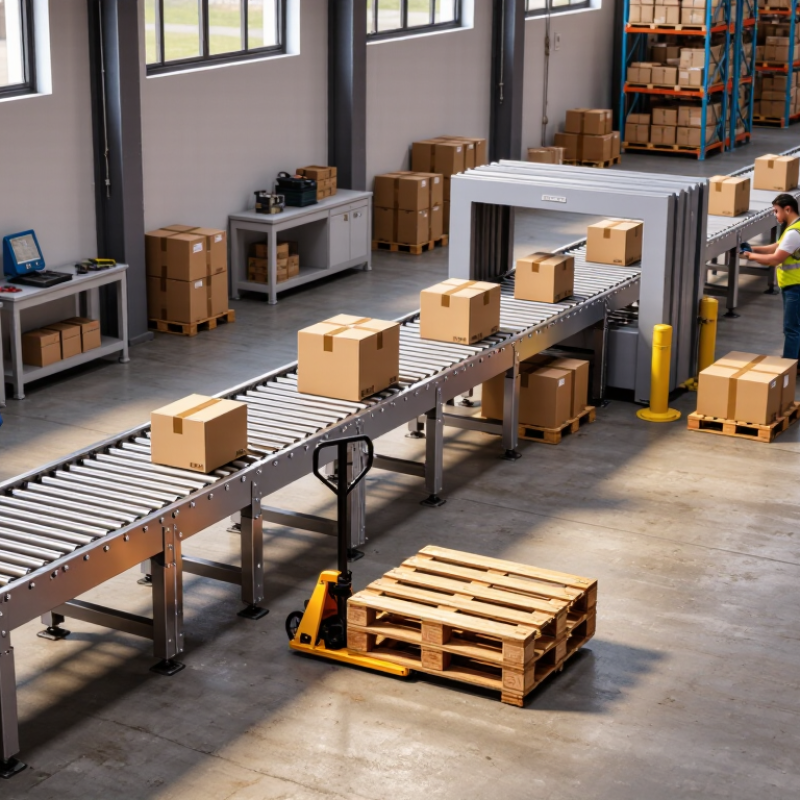
Understanding Roller Conveyor Types and Their Applications
How to Choose the Right Roller Conveyor?
Understanding Roller Conveyor Types and Their Applications
Roller conveyors move cartons, totes, trays, and other unit loads with controlled effort. In field assessments, the application usually determines the correct conveyor type. Gravity roller conveyors work well for manual movement, short transfers, and gentle slopes. They need little maintenance. However, operators must push loads consistently.
Powered roller conveyors use motors for longer distances and steadier flow. They suit shipping areas, production lines, and heavier cartons. Accumulation conveyors can hold products without stopping the entire line. This helps protect fragile packages.
It also adds controls, sensors, and maintenance points. Flexible roller conveyors support temporary lines and changing layouts. They are practical, but their uneven alignment can affect load stability.
Choose roller diameter and spacing according to the smallest load. A carton should rest on at least three rollers whenever possible. Check the load weight, base shape, and surface condition. A small roller may struggle under a heavy steel container. Wide, uneven loads can also bridge across rollers.
Think about the working environment. Dust, moisture, temperature, and cleaning methods affect materials and bearings. At packing stations, low noise and easy access matter. At receiving docks, impact resistance may matter more.
I once saw a line selected only by maximum weight. It carried the load, but frequent stops followed. The overlooked issue was poor spacing. Measure real products, not ideal samples. Leave room for inspection and safe operator movement.
Choosing the Right Conveyor Drive and Roller Configuration
Choosing a roller conveyor starts with the drive, not the frame.
In a busy warehouse, I first watch how cartons move between workstations. Gravity conveyors suit steady, manual flow on a slight incline. Powered rollers provide consistent movement when loads vary or distances increase. A belt-driven configuration is often quieter and handles smaller packages. Chain-driven rollers offer strong traction for heavier pallets. However, an oversized drive can create abrupt starts and product damage. That mistake is easy to miss during a quick specification review.
Measure twice. Test once.
Roller configuration must match the load’s footprint and weight.
Keep at least three rollers beneath a rigid package at all times. Smaller roller pitch supports narrow cartons more reliably. Larger diameters reduce deflection under heavy loads. For uneven items, wider rollers or closer spacing can prevent rocking. Consider accumulation requirements, too. Zero-pressure zones need sensors, controls, and separated drive sections. A simple continuous drive may cost less, but it can press packages together. I have seen operators reduce speed to compensate, although throughput suffers.
Tips: Confirm the heaviest load, smallest package, target speed, incline, and stopping frequency. Check temperature, dust, moisture, and cleaning methods. Ask for a load test using real cartons. Technical drawings can hide friction, noise, and transfer gaps. Record motor torque and roller spacing before approval.
Evaluating Layout, Speed, Safety, and Maintenance Needs
How to Choose the Right Roller Conveyor?
Evaluating Layout, Speed, Safety, and Maintenance Needs
A roller conveyor should fit the facility, not force the facility to adapt. Measure aisle widths, column positions, transfer points, and walking routes before selecting equipment. A straight layout may look efficient, but small turns can reduce travel distance and improve access. Leave enough clearance for cleaning and repairs. I have seen crowded layouts create daily delays, even when the conveyor itself worked well.
Speed must match the product and the people operating nearby. Fragile cartons may need slower movement and controlled spacing. Heavy boxes require rollers with suitable load ratings and stable frames. Accumulation zones can prevent collisions, but they need accurate sensors and proper controls. Faster is not always better. Test the conveyor with real loads, because empty cartons often hide alignment problems.
Safety checks should cover pinch points, transfer areas, emergency stops, guarding, and safe operator access. Clear labels help, but training remains essential. Maintenance begins with accessible bearings, simple roller replacement, and visible inspection points. Create a schedule for checking noise, vibration, loose fasteners, and damaged surfaces. Dust and packaging debris can increase friction quickly. Keep spare components available. My own mistake was focusing on purchase cost and underestimating cleaning time. A cheaper conveyor can become expensive when every service task requires production downtime.
How to Choose the Right Roller Conveyor?
Typical conveyor speed ranges by load type for evaluating layout, safety, and maintenance requirements
Pallet conveyors generally operate at lower speeds because of their higher loads and stopping requirements, while cartons and totes can move faster when spacing and accumulation are properly controlled. Final selection should also consider conveyor length, transfer points, guarding, emergency stops, roller loading, access for cleaning, and preventive maintenance intervals.



 © Copyright 2020 Tianjin Tanghaidongyang Valve Co., Ltd. All Rights Reserved.