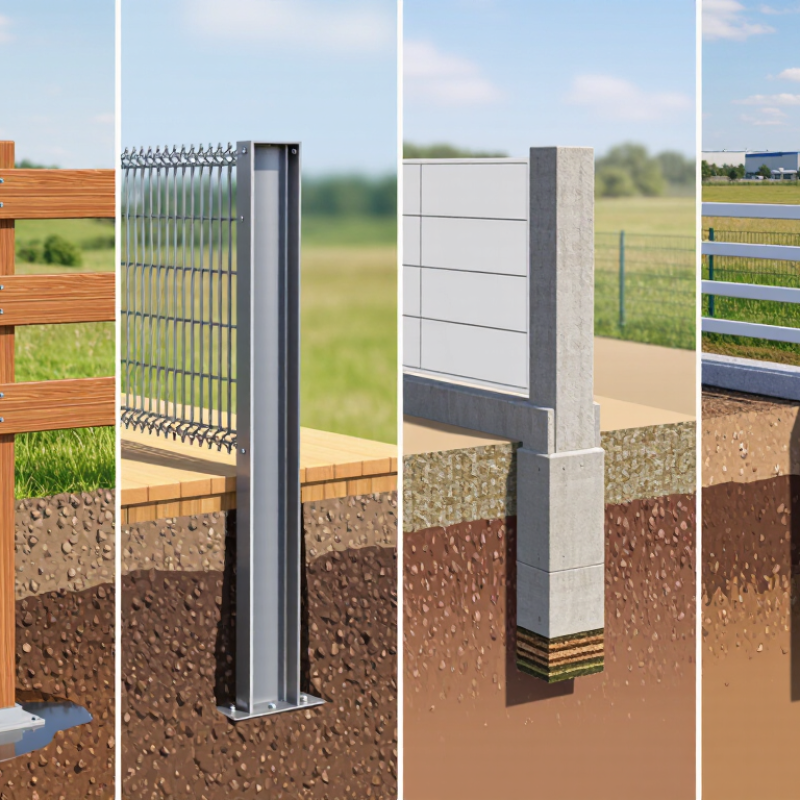
| Pressure-Treated Wood | Easy to cut and install; compatible with most wood fencing; absorbs moderate impact without cracking. | Can rot at the ground line if moisture protection is inadequate; may warp, split, or shrink over time. | Privacy fences, picket fences, garden fences, and many residential wood panels. | Often lasts for many years when properly treated, drained, and maintained; actual life depends heavily on soil moisture and treatment level. | Use a post size appropriate to the fence height and wind exposure. Keep the post bottom away from standing water and provide well-draining backfill. |
| Cedar or Other Naturally Durable Wood | Good resistance to decay, attractive appearance, and relatively easy field modification. | Usually costs more than standard treated lumber; can weather, split, or soften near consistently wet soil. | Decorative fences, privacy fencing, and projects where appearance is important. | Durability varies by wood species, heartwood content, climate, and exposure. Direct soil contact generally shortens service life. | Use durable posts or isolate the wood from persistent moisture. Seal exposed end grain and inspect the ground-line area periodically. |
| Galvanized Steel | High strength for its size; resists bending and is useful where wind loads or narrow posts are concerns. | Can corrode if the protective coating is damaged; may require compatible brackets and fasteners. | Chain-link fencing, agricultural fencing, metal panels, and high-wind installations. | Long service life is possible when the zinc coating remains intact and water does not collect around damaged areas. | Protect cut edges and scratches. Use corrosion-compatible hardware and embed the post deeply enough for the fence height and site conditions. |
| Aluminum | Lightweight, naturally corrosion-resistant, and easy to handle. | Less rigid than steel and more vulnerable to bending from impact or high wind unless the section is properly sized. | Decorative metal fences, pool enclosures, and low- to moderate-load residential fencing. | Typically durable in outdoor environments, although surface damage and galvanic corrosion at dissimilar-metal connections should be managed. | Use reinforced sections or shorter spans where wind exposure is high. Follow the fence-system requirements for post spacing and footings. |
| Concrete | Very rigid, resistant to rot and insects, and capable of supporting heavy masonry or metal fence sections. | Heavy to transport and install; difficult to modify after placement; can crack if poorly reinforced or exposed to movement and freeze-thaw conditions. | Masonry walls, heavy gates, security fencing, and permanent boundary structures. | Can provide a long service life when correctly reinforced, drained, and designed for local soil and climate conditions. | Use a properly designed footing, reinforcement where needed, and drainage that limits prolonged water exposure and frost-related movement. |
| Composite or Recycled-Polymer Post | Resists rot, insects, and many moisture-related problems; provides a consistent appearance. | Product stiffness and temperature performance vary; may require a structural insert for taller or wind-exposed fences. | Decorative, low-maintenance residential fencing and selected privacy-fence systems. | Service life depends on the formulation, ultraviolet protection, structural design, and installation method. | Follow the system's footing and reinforcement requirements. Do not assume a hollow polymer post has the same bending capacity as solid wood or steel. |



 © Copyright 2020 Tianjin Tanghaidongyang Valve Co., Ltd. All Rights Reserved.