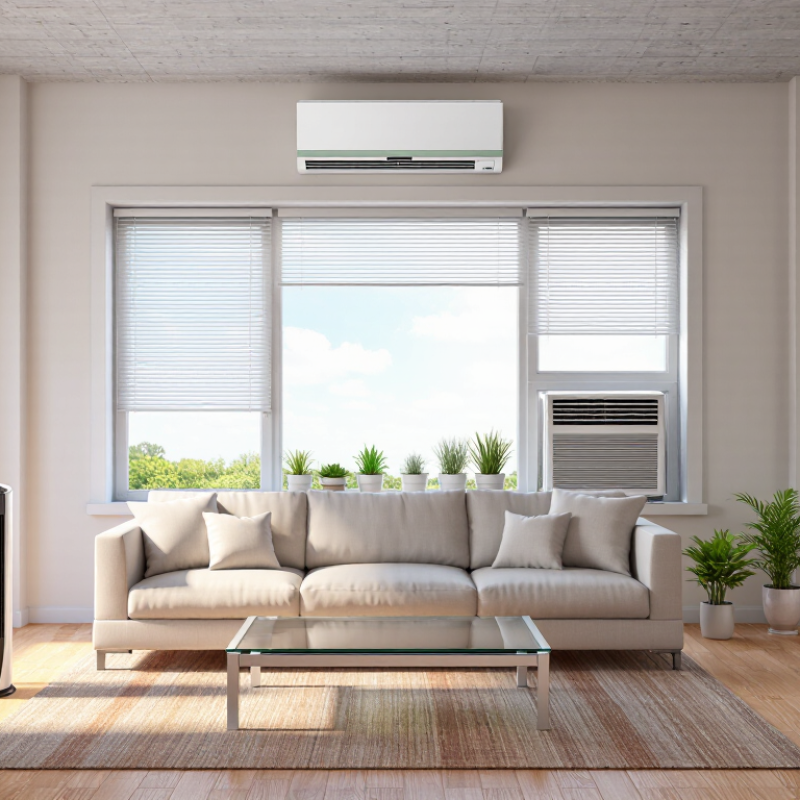
Choosing the right air conditioning system starts with comparing how each type works in your space. A split system suits homes with several rooms and permanent installation. It offers quieter indoor operation and efficient temperature control. A window unit costs less upfront, but it cools one room and may block daylight. Portable units are flexible, although their exhaust hose can reduce efficiency.
Central air conditioning provides even cooling through ducts. However, poor duct sealing can waste substantial energy.
The U.S. Department of Energy reports that duct losses may exceed 30% of cooling energy in some homes.
Ductless mini-split systems avoid much of this loss and support room-by-room control. They can be practical for older buildings. Still, installation quality matters more than many buyers expect.
Tips: Measure the room, insulation, sun exposure, and ceiling height before selecting capacity. An oversized system may cool quickly but remove less humidity. An undersized system can run continuously. Check seasonal efficiency ratings, noise levels, filter access, and repair availability.
The International Energy Agency’s The Future of Cooling reports that global space-cooling energy demand could more than triple by 2050 without stronger efficiency measures.
That figure deserves attention, but household savings will vary.
I would not choose equipment from the rating alone. A lower-rated system with careful sizing may perform better than a highly rated system installed poorly. Think about maintenance, too. Dirty filters quietly change the result.



 © Copyright 2020 Tianjin Tanghaidongyang Valve Co., Ltd. All Rights Reserved.