| Product type | Insulated and non-insulated butt splice connectors for joining conductors with a crimping tool. | Specify connector style, conductor material, insulation type, and intended application. |
| Conductor sizing | Common product ranges are marked in AWG or mm²; examples include 22–18 AWG (about 0.3–0.8 mm²) and 16–14 AWG (about 1.3–2.1 mm²). | Check the connector’s printed size range against the actual conductor and the applicable wiring requirements. |
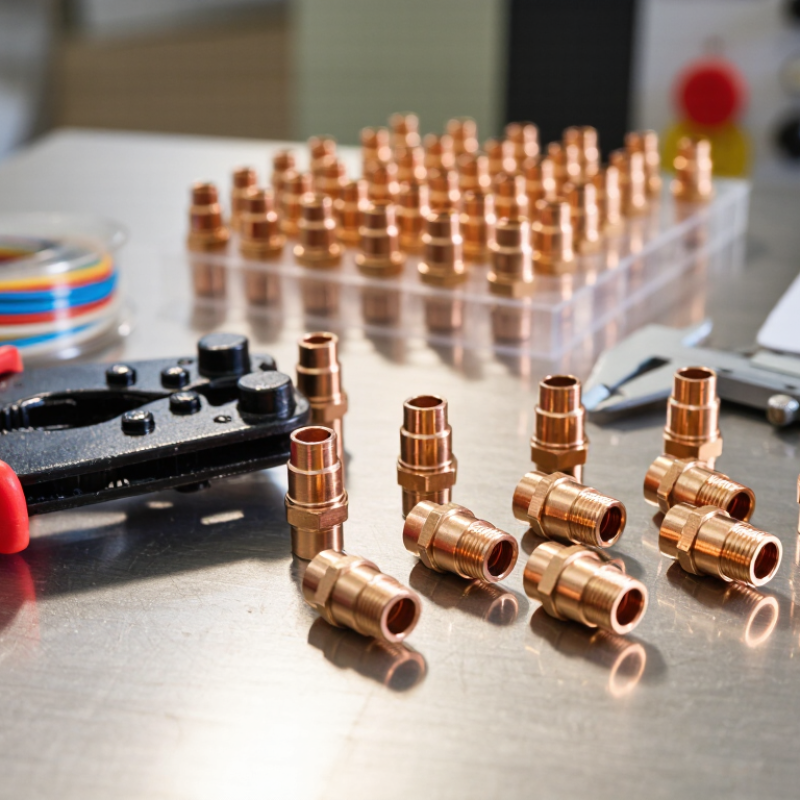
| Materials and finish | Barrels are commonly made from copper or copper alloy, with tin plating often used to help protect the surface from oxidation. | Request material, plating, and dimensional details; confirm suitability for the operating environment. |
| Insulation options | Common options include PVC-insulated and heat-shrink versions. Color coding may indicate a wire-size range, but conventions can differ by product and market. | Confirm insulation material, temperature rating, size coding, and any required flame or environmental performance. |
| Ordering information | A purchase inquiry typically lists part description, size, insulation style, quantity, packaging preference, and destination country. | Ask for a written quotation with unit price, minimum order quantity, lead time, payment terms, and quote validity. |
| Customization | Potential options include packaging format, label language, carton markings, color selection, and product dimensions, subject to production capability and order quantity. | Approve drawings, samples, artwork, and packaging specifications before mass production; confirm any tooling or setup charges. |
| Quality checks | Buyers commonly review dimensions, crimp-barrel condition, plating appearance, insulation fit, packaging, and sample crimp performance. | Agree on acceptance criteria and inspection records. Ask for applicable test reports or conformity documents when required. |
| Standards and compliance | Requirements depend on product design, end use, and destination market; IEC 60352-2 covers solderless connections, including crimped connections. | Do not assume a product is certified based on a general claim. Verify the exact model, test scope, certificate, and market applicability. |
| Packaging and labeling | Connectors may be packed in bags, boxes, or bulk cartons; labels can include size, quantity, and product description. | Confirm pack quantity, carton dimensions and weight, language needs, and any destination-specific marking rules. |
| Shipping methods | Air freight and express services are generally used for smaller or time-sensitive shipments; sea freight is commonly considered for larger shipments. | Compare total landed cost, transit estimates, insurance, handling charges, and delivery terms such as Incoterms® 2020 rules. |
| Export documents | A shipment may require a commercial invoice, packing list, transport document, and other documents depending on the route and destination. | Confirm document requirements with the freight forwarder and importer. Customs classification and duties depend on the product and destination. |
| Buyer checklist | Finalize specifications, sample approval, order quantity, packaging, inspection plan, payment terms, and shipping arrangement before confirming the order. | Keep the approved specification and purchase order consistent to reduce misunderstandings across production and delivery. |


 © Copyright 2020 Tianjin Tanghaidongyang Valve Co., Ltd. All Rights Reserved.