What Is a Centrifugal Vent Fan and How Does It Work?
Common Types and Performance Features
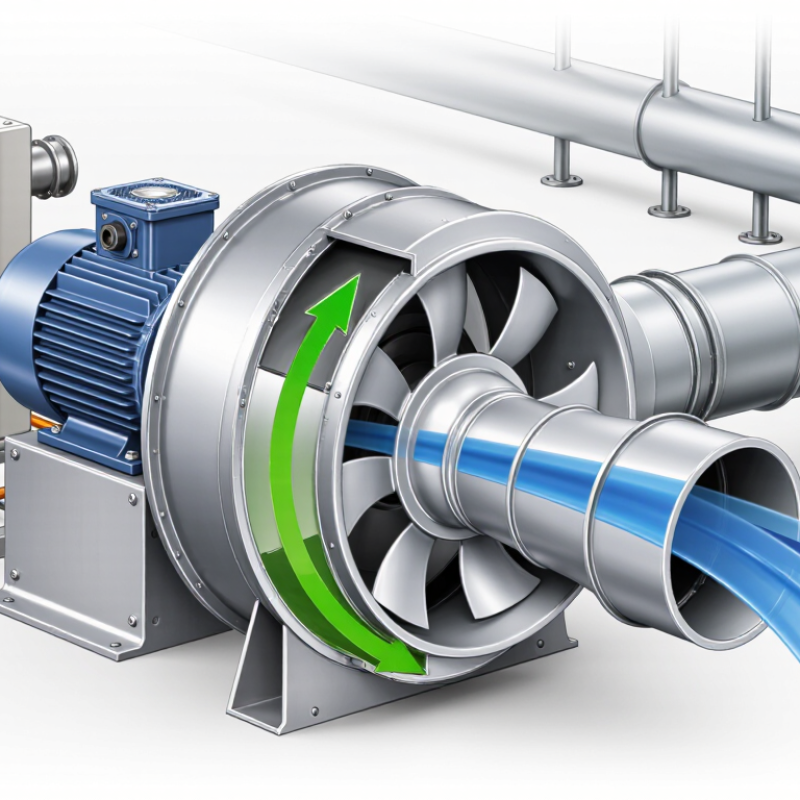
A centrifugal vent fan moves air with a rotating impeller. Air enters near the shaft, then leaves through the casing at higher pressure. That pressure helps overcome resistance from ducts, filters, grilles, and dampers. Unlike an axial fan, it suits systems where airflow must travel through restrictive paths.
Backward-curved fans usually deliver strong efficiency and stable pressure. Forward-curved designs can be compact and quiet, but they may draw more power at high resistance. Radial-blade fans handle dusty or particulate-laden air better, although their sound level may be higher.
Single-inlet models are common. Double-inlet versions move more air within a similar casing width. Inline centrifugal units fit ducts directly.
Key specifications include airflow, static pressure, speed, motor power, efficiency, noise, and controllability.
Do not judge capacity from airflow alone. A fan rated at 2,000 cubic metres per hour may perform poorly after a dirty filter is added. Measure the system resistance.
Variable-speed control can reduce energy use and soften startup, but incorrect settings may cause weak ventilation or motor stress. In real installations, vibration, cleaning access, and drain positioning also matter.
One common design mistake is choosing the quietest fan without checking pressure performance. No selection is perfect.
Review measured airflow after installation, because paper calculations often miss bends, leakage, and changing filter conditions.



 © Copyright 2020 Tianjin Tanghaidongyang Valve Co., Ltd. All Rights Reserved.