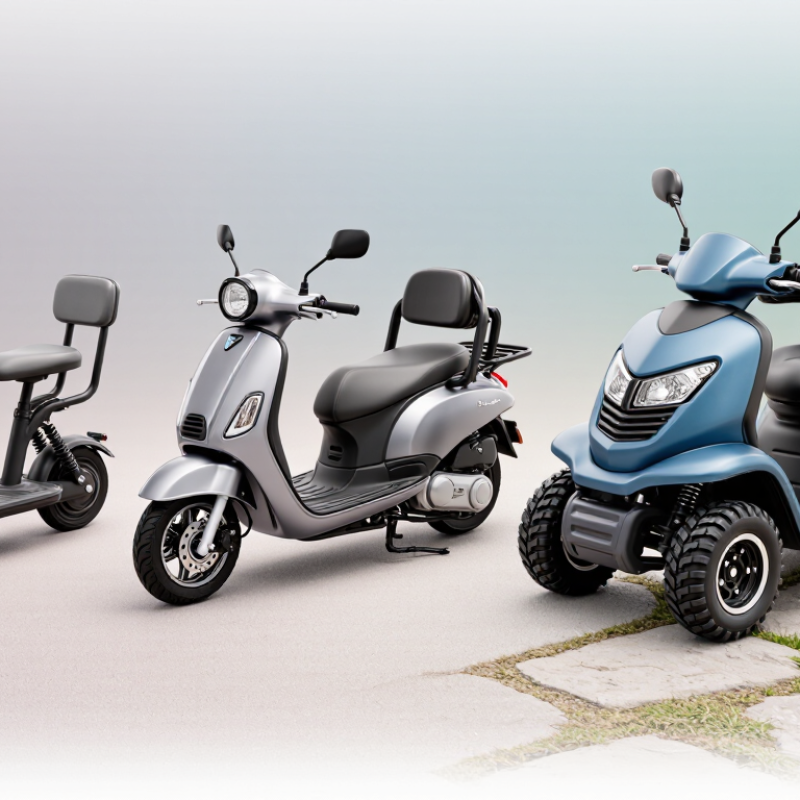
| Travel / portable | Short trips, errands, and people who need to transport a scooter in a vehicle. | Typically suited to smooth, paved routes. Smaller wheels and a lighter frame may be less forgiving on uneven ground. | Often has a more compact seat and fewer adjustment options than larger models. | Generally compact, making it convenient in tighter indoor spaces; turning performance varies by design. | Usually designed to disassemble or fold for transport. Check the weight of the heaviest piece and whether it can be lifted safely. | Best when easy transport matters more than long-distance comfort or rough-surface capability. Confirm the assembled dimensions fit through doorways and into storage. |
| Three-wheel | Indoor use and paved, relatively even outdoor routes where a tighter turning circle is useful. | Often less stable than a comparable four-wheel model, especially on slopes, uneven surfaces, or during sharp turns. Drive slowly and follow the manufacturer’s guidance. | May offer more legroom at the front, though seat support and adjustability differ between models. | Typically offers a tighter turning circle, which can help in shops and other confined areas. | Available in both compact and larger formats; portability depends on the specific model. | A practical choice for maneuverability on level ground, but not automatically the best option for outdoor routes with cambers or rough patches. |
| Four-wheel | Regular outdoor use, longer outings, and routes that include varied but manageable paved surfaces. | The four-wheel layout generally provides a steadier feel than a similar three-wheel scooter. It does not eliminate tipping risk on steep slopes or uneven ground. | Often available with a larger seat and more supportive features than compact travel models. | Usually needs more turning space than a three-wheel design, so check indoor clearances. | Often larger and heavier than portable models, which can make vehicle transport more difficult. | A balanced option for many users who need outdoor stability as well as everyday comfort. Check ground clearance, turning radius, and intended terrain. |
| Heavy-duty / high-capacity | Users who need a higher weight capacity, a larger seating area, or a more substantial outdoor scooter. | Can have a robust frame and larger components, but stability still depends on the model, terrain, load, and correct operation. | May provide a wider seat and more supportive options. Verify the seat dimensions and weight capacity rather than assuming they will suit every user. | Typically larger, so it may be harder to use in narrow hallways, small rooms, or crowded indoor spaces. | Usually the least convenient type to lift or transport; measure storage and vehicle space before purchase. | Consider only a model whose stated capacity and dimensions meet the user’s needs. Check charging access, transport arrangements, and local access restrictions. |
| Before choosing any type | Match the scooter to the user’s balance, posture, strength, vision, and typical routes. Check the manufacturer’s maximum user weight, braking and control layout, battery range under realistic conditions, turning space, seat fit, and ability to transfer on and off safely. A healthcare professional or mobility specialist can help assess suitability, and local rules may apply to where a scooter can be used. |



 © Copyright 2020 Tianjin Tanghaidongyang Valve Co., Ltd. All Rights Reserved.