Best Forestry Excavators for Global Buyers in 2026?
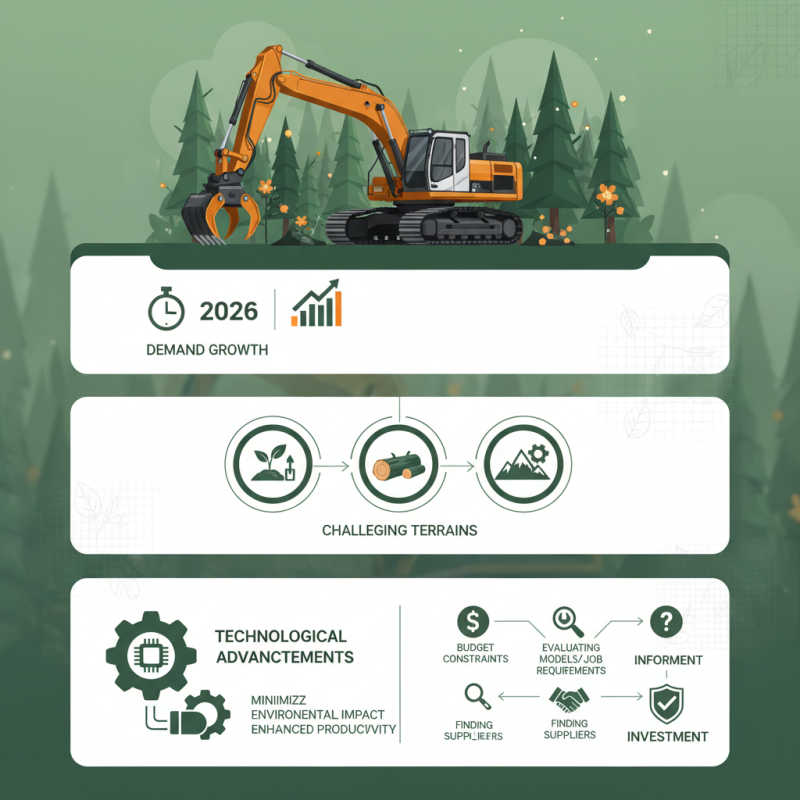
As we look towards 2026, the demand for efficient and reliable forestry excavators continues to grow. These powerful machines play a crucial role in sustainable forest management. They are essential for tasks such as tree planting, harvesting, and maintenance in challenging terrains. With advancements in technology, the forestry excavator market is evolving rapidly.
Forestry excavators are designed specifically for the unique needs of forest operations. They enhance productivity while minimizing environmental impact. Buyers must consider various factors when selecting the right excavator. Options vary in size, capabilities, and attachments. A reliable excavator can reduce operating costs and improve safety.
However, the choice is not straightforward. Evaluating the right model demands expertise and an understanding of specific job requirements. Buyers might face challenges, from budget constraints to the right suppliers. As the industry grows, staying informed on the latest advancements is essential for making the right investment in a forestry excavator.
The Evolution of Forestry Excavators: Trends from 2020 to 2026
The evolution of forestry excavators has been remarkable from 2020 to 2026. Significant advancements have transformed how these machines serve the industry. A report by the International Forestry Association indicates that the market for forestry excavators is expected to grow by 5% annually. These changes are driven by new technologies and sustainability concerns.
By 2026, many forestry excavators will feature enhanced fuel efficiency. The integration of hybrid and electric technology is becoming common. As reported by the Global Agricultural Machinery Market, over 40% of new models will likely have electric components. This shift reflects the industry's response to environmental regulations. However, the transition is not without challenges. Questions remain about the reliability of electric equipment in rugged forestry environments.
Operator safety has garnered increased attention as well. Enhanced safety features are now standard in modern excavators. However, despite these advancements, incidents still occur. Training programs need continual updates to keep pace with new technology. Improving operator skills is essential for maximizing the potential of these advanced machines. While the future looks promising, ongoing refinement and adaptation are necessary to truly harness the full capabilities of forestry excavators.
Key Specifications and Features to Consider in Forestry Excavators
When selecting a forestry excavator, certain specifications are crucial. These machines must handle heavy loads effectively while navigating dense forests. Power and weight capacity often rank atop buyer priorities. Most forestry excavators have an operating weight between 20 to 35 tons. This weight allows them to maintain stability on uneven terrain.
Additionally, hydraulics play a vital role in performance. It is reported that advanced hydraulic systems can enhance lifting capacity by up to 30%. This improvement can lead to significant time savings in logging operations. Buyers often overlook the importance of versatility. Machines with interchangeable attachments can adapt to various tasks, from tree removal to site clearing.
Another critical aspect is fuel efficiency. A report from the International Energy Agency highlights that fuel-efficient models can reduce operational costs by 15%. This metric is significant for long-term budget planning. Comfort and safety features, such as ergonomic controls and ROPS, should not be ignored. It enhances the operator's experience and ensures safety during long hours of operation. Attention to these specifications reflects the buyer's serious commitment to effective forestry management.
Top Brands Leading the Forestry Excavator Market in 2026
The forestry excavator market is poised for significant growth in 2026. Industry reports indicate a rising demand for specialized machinery in global forestry operations. This trend highlights the need for powerful, efficient, and reliable excavators. Through advanced technologies, brands are focusing on eco-friendly solutions that minimize environmental impact. Recent data suggests that the market will grow at a compound annual growth rate (CAGR) of over 5% from 2024 to 2026.
Notable players are enhancing their product lines to cater to the specific needs of forestry. Innovations in hydraulic systems have increased efficiency and reduced fuel consumption. However, despite these advancements, challenges such as high operating costs and maintenance remain relevant. Buyers are urged to consider not just initial purchase prices but total cost of ownership. Long-term strategies for performance and efficiency should guide their decisions.
Additionally, market analysis reveals a shift toward automation and digitalization. Many brands are investing in smart technologies. These innovations promise improved productivity and safety. However, there still exists a gap in operator training and skill development. As the market evolves, so too must the skill sets of those operating these machines. This evolving landscape presents both challenges and opportunities for industry stakeholders.
Environmental Regulations Impacting Forestry Excavator Design and Usage
Environmental regulations are reshaping the design and usage of forestry excavators. These changes aim to reduce ecological footprints while enhancing operational efficiency. New standards often include stricter emissions requirements. Manufacturers must innovate to comply with these rules, balancing power and environmental considerations.
As forest management practices evolve, excavators are increasingly required to minimize soil disturbance. Equipment must be designed to operate on sensitive landscapes without causing damage. This includes narrower tracks and improved stabilization systems. These features help maintain soil integrity while maximizing productivity.
However, the path forward is not without challenges. Implementing these designs requires investment and technical expertise. Moreover, users need training to operate advanced systems effectively. The gap between existing equipment and new regulations creates obstacles that companies must navigate. Addressing these issues will be crucial for success in the forestry sector.
Best Forestry Excavators - Projected Performance in 2026
Market Forecast: Global Sales Projections for Forestry Excavators by 2026
The market for forestry excavators is poised for significant growth by 2026. According to a recent report, global sales are projected to surpass $5 billion. This reflects a compound annual growth rate (CAGR) of about 8% over the next few years. Innovations in tech and increased demand for timber are major contributors to this growth.
With sustainable practices gaining traction, buyers are becoming more discerning. They seek machines that combine efficiency with eco-friendliness. This creates a challenge for manufacturers to innovate while adhering to stricter environmental regulations. Additionally, the fluctuating prices of raw materials, such as steel, pose a risk to profitability.
Emerging markets are expected to play a significant role in these projections. Countries in Asia-Pacific and parts of Africa are increasing investments in forestry infrastructure. However, logistics and supply chain issues need careful attention going forward. Overall, the market's landscape is evolving. The need for reliability and performance in forestry excavators will remain critical as we approach 2026.



 © Copyright 2020 Tianjin Tanghaidongyang Valve Co., Ltd. All Rights Reserved.