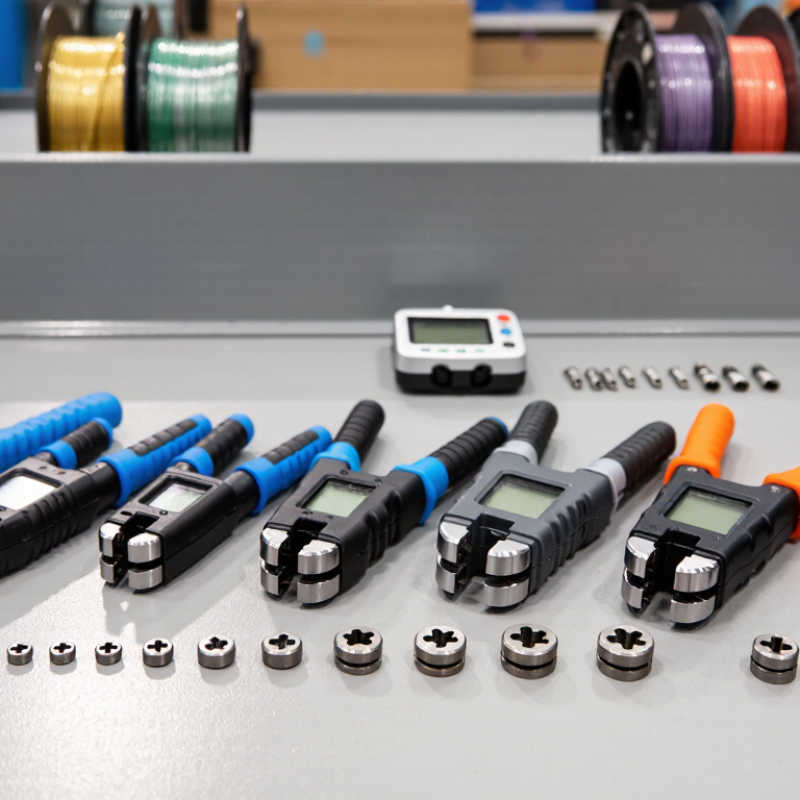
| 1. Digital Ratchet Crimper | Insulated and non-insulated terminals for low-voltage control wiring, appliances, and general electrical assembly. | Approximately 0.25–6 mm², depending on the interchangeable die set. | LCD or LED display for battery status, cycle count, and service reminders; usually not a direct measurement of crimp quality. | Rechargeable battery or manual ratchet backup; typically compact enough for field service. | Full-cycle ratchet
Jaw-release mechanism
Insulated handles and guarded moving parts. | Clean the dies after use, inspect jaw alignment, lubricate the pivot lightly, and replace worn dies or batteries. | Confirm battery chemistry, charger plug, charging voltage, spare-die availability, user manual language, and conformity documents required by the destination market. | Electrical contractors, maintenance teams, and small production workshops. |
| 2. Hydraulic Digital Crimper | Heavy-duty compression of copper or aluminum cable lugs used in distribution panels, battery systems, and industrial power wiring. | Commonly about 10–300 mm²; exact capacity depends on die geometry and conductor material. | Digital pressure or force readout, cycle counter, low-battery warning, and sometimes stored crimp records. | Battery-powered hydraulic pump; heavier than manual tools and generally supplied with a hard case. | Pressure relief valve, automatic return, overload protection, anti-slip grip, and insulated operating controls. | Check hydraulic-fluid leakage, inspect seals and pins, clean die cavities, charge batteries correctly, and follow the manufacturer’s pressure-calibration schedule. | Verify rated crimp force, oil specification, replacement seals, battery transport rules, charger compatibility, and packaging suitable for international freight. | Power installers, renewable-energy contractors, and industrial maintenance crews. |
| 3. Battery-Powered Cable Crimper | Fast repetitive crimping of cable lugs and connectors where mains power is unavailable or mobility is important. | Typically 16–400 mm² with dedicated dies for specific lug families. | Digital display for crimp count, battery level, operating mode, and error codes; some tools record completed cycles. | 18–21 V-class lithium-ion battery systems are common; operating time depends on cable size and ambient temperature. | Two-step trigger, emergency stop or release control, overload detection, LED work light, and automatic ram return. | Keep battery contacts dry, clean the ram and dies, inspect the release valve, store batteries partially charged, and avoid deep discharge. | Check whether batteries are included, confirm lithium-battery shipping documentation, inspect regional charger approval, and request spare-battery lead times. | Mobile installers, utility repair teams, and construction contractors. |
| 4. Pneumatic Digital Crimping Press | High-volume crimping of terminals, ferrules, seals, and wire assemblies on a production bench. | Often 0.14–6 mm² for wire terminals; larger ranges require dedicated industrial presses and tooling. | Digital stroke, pressure, cycle-count, and fault monitoring through a control panel or programmable controller. | Requires a clean compressed-air supply; less portable but suitable for continuous workstation use. | Two-hand start or guarded foot control, emergency stop, die guarding, pressure regulator, and air-loss protection. | Drain the air filter, check hose fittings, inspect dies for burrs, lubricate only where specified, and verify pressure settings at regular intervals. | Confirm air-pressure and air-consumption requirements, control-voltage compatibility, plug standards, machine guarding documents, and spare tooling support. | Wire-harness manufacturers and medium-volume assembly operations. |
| 5. Programmable Servo Crimping Machine | Repeatable terminal crimping in automated or semi-automated wire-processing lines. | Commonly 0.08–10 mm², subject to applicator, terminal design, and conductor material. | Digital setup of crimp height, stroke, speed, force monitoring, recipe storage, and quality alarms. | Bench or line-mounted equipment; requires stable mains power and a controlled production environment. | Interlocked guarding, emergency stop, overload protection, abnormal-force detection, and tool-access lockout. | Remove conductor debris, inspect applicator alignment, back up machine recipes, calibrate force monitoring, and replace wear components according to cycle count. | Check mains voltage and frequency, language options for the interface, remote-support availability, installation requirements, training, and local service coverage. | High-volume manufacturers requiring traceability and consistent process control. |
| 6. Smart Ferrule Crimper | End-sleeve ferrules for control cabinets, terminal blocks, instrumentation, and stranded-wire connections. | Approximately 0.25–16 mm², depending on square, hexagonal, or trapezoidal crimp geometry. | Digital cycle counter, battery indicator, die-position confirmation, and optional Bluetooth or USB data export. | Handheld manual, powered, or hybrid versions; generally lighter than hydraulic cable crimpers. | Self-adjusting mechanism, anti-jam release, guarded jaws, non-slip grip, and low-battery warning on powered versions. | Brush ferrule fragments from the jaws, keep the adjustment mechanism clean, inspect the crimp profile, and store the tool in a dry case. | Confirm ferrule-size standards, die profile, compatibility with local terminal systems, battery or USB charging requirements, and calibration documentation. | Panel builders, automation technicians, and control-system installers. |
| 7. Coaxial and Data-Cable Digital Crimper | Compression or termination of coaxial, twisted-pair, and selected communication cables. | Depends on connector family; common coaxial cable diameters are approximately 3–8 mm, while modular plugs require matching connector dies. | Digital length or cycle settings, connector-profile selection, cable-test indication, and sometimes continuity or shield checks. | Usually lightweight and handheld; manual models need no battery, while smart versions use replaceable or rechargeable cells. | Connector-presence check, adjustable compression stop, insulated grip, and clear die markings to reduce incorrect termination. | Clean connector debris, inspect compression inserts, check test-lead condition, and verify termination dimensions with a sample cable. | Confirm supported connector standards, regional telecommunications requirements, die interchangeability, test-function accuracy, and replacement-part availability. | Network installers, CCTV technicians, telecommunications contractors, and service distributors. |



 © Copyright 2020 Tianjin Tanghaidongyang Valve Co., Ltd. All Rights Reserved.