| Inflation Pressure | Common passenger-car range: approximately 30–35 psi (2.1–2.4 bar) | Compressed air supports most of the vehicle load and allows the tyre to flex in a controlled way. | Correct pressure helps maintain the intended contact patch, steering response, braking performance, and heat control. The vehicle manufacturer’s recommended pressure should always take priority over a generic range. |
| Contact Patch | Usually about the size of an adult hand per tyre, depending on load and pressure | The tread area touching the road transfers braking, acceleration, and cornering forces. | A stable contact patch improves grip and helps the vehicle respond predictably during emergency manoeuvres. |
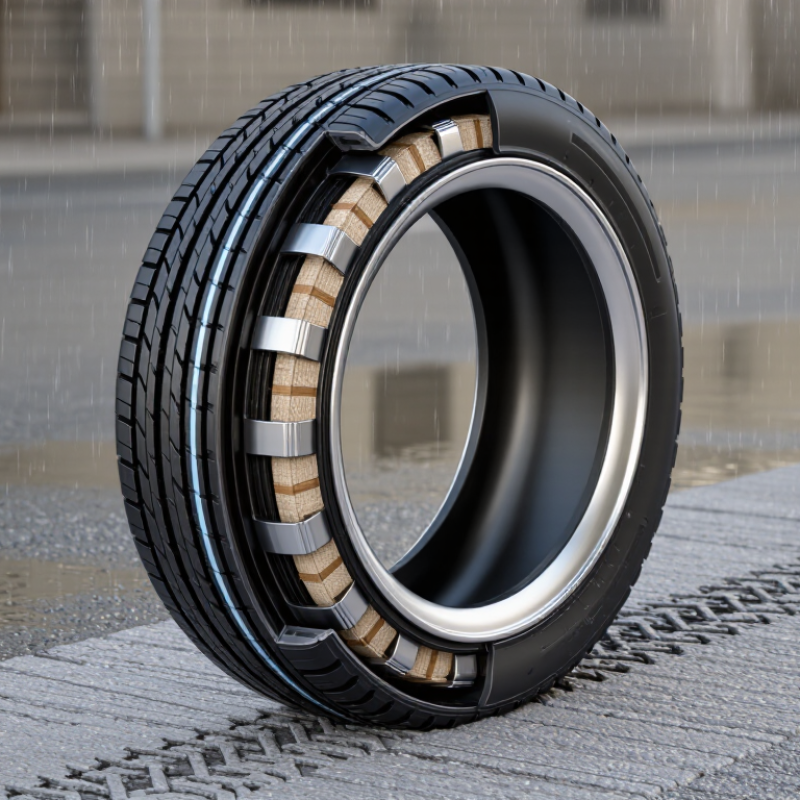
| Tread Pattern | Grooves, ribs, blocks, and sipes vary by tyre design | Grooves channel water away from the contact patch, while blocks and sipes create edges that interact with the road surface. | Effective water evacuation reduces the risk of water build-up between the tyre and road, helping preserve wet-road traction. |
| Tread Depth | Many new passenger-car tyres have roughly 7–9 mm of tread; the legal minimum varies by country | Tread rubber gradually wears away as it contacts the road. | Sufficient tread supports water evacuation and grip. Tyres should be replaced before reaching the applicable legal limit or the manufacturer’s wear indicator. |
| Tread-Wear Indicators | Raised bars in the main grooves, commonly set at 1.6 mm above the groove base | These bars become level with the surrounding tread when the tyre reaches the widely used minimum legal tread depth. | They provide a quick visual warning that the tyre needs replacement, although tyres may require replacement earlier because of damage, age, or poor condition. |
| Carcass and Ply Structure | Typically includes textile reinforcement; some tyres also use steel belts | The carcass carries load and maintains the tyre’s shape, while belts reinforce the tread area and control deformation. | Structural reinforcement improves stability, steering precision, puncture resistance, and resistance to excessive flexing. |
| Sidewall | Flexible section between the rim and tread; size is identified by the tyre markings | The sidewall flexes as the wheel rolls and absorbs part of the impact from road irregularities. | Controlled sidewall flex contributes to ride comfort and grip. Bulges, cuts, or exposed cords indicate potentially dangerous structural damage. |
| Bead | Reinforced inner edge seated against the wheel rim | The bead anchors the tyre to the rim and helps maintain an airtight seal. | A secure bead prevents air leakage and keeps the tyre correctly positioned during braking, cornering, and acceleration. |
| Valve and Valve Core | Inflation valve fitted through the wheel; valve caps help keep out dirt and moisture | The valve allows air to enter while the valve core prevents air from escaping under normal conditions. | A healthy valve supports stable pressure. Leaks can cause underinflation, heat build-up, uneven wear, and reduced handling control. |
| Load Capacity | Specified by the tyre’s load index and the vehicle manufacturer’s requirements | The tyre structure and inflation pressure are designed to support a defined maximum load at a specified speed and pressure. | Staying within the rated load reduces overheating, structural stress, and the risk of tyre failure. |
| Speed Rating | Letter code indicating the maximum certified speed under specified test conditions | Tyres with higher speed ratings use construction and materials designed to manage greater heat and centrifugal forces. | Using tyres that meet the vehicle’s required speed rating helps preserve stability and durability during high-speed operation. |
| Underinflation | Pressure below the vehicle manufacturer’s recommended cold pressure | The sidewalls flex more, increasing rolling resistance and heat generation. | It can cause slower steering response, longer braking distances, shoulder wear, higher fuel or energy consumption, and an increased risk of failure. |
| Overinflation | Pressure above the recommended cold pressure | The tyre becomes stiffer and the contact patch may become less evenly distributed. | It can reduce ride comfort, decrease grip on uneven surfaces, increase centre tread wear, and make the vehicle more sensitive to impacts. |
| Rolling Resistance | Energy lost mainly through rubber and carcass deformation as the tyre rolls | Part of the energy used to move the vehicle is converted into heat within the tyre. | Lower rolling resistance can improve fuel economy or electric range, while correct inflation helps prevent unnecessary energy loss. |
| Heat Management | Heat rises with speed, heavy loads, high ambient temperatures, and insufficient pressure | Tyre flexing creates heat, and the tread and sidewall release some of this heat into the surrounding air. | Keeping tyres correctly inflated and within their load and speed ratings helps limit heat-related degradation and failure risk. |



 © Copyright 2020 Tianjin Tanghaidongyang Valve Co., Ltd. All Rights Reserved.