| Material | Acrylonitrile Butadiene Styrene (ABS) | A thermoplastic engineering plastic that combines rigidity, impact resistance, dimensional stability, and relatively easy processing. |
| Primary Manufacturing Method | Injection molding | Molten ABS is injected into a metal mold, cooled, and ejected to produce repeatable housing components at medium to high production volumes. |
| Recommended Melt Temperature | Approximately 220–260°C | This processing window supports proper flow and cavity filling. The exact setting depends on the ABS grade, part thickness, mold design, and required surface finish. |
| Typical Mold Temperature | Approximately 40–80°C | A controlled mold temperature helps improve surface appearance, reduce weld-line visibility, and support more consistent dimensional results. |
| Drying Requirement | Commonly 80–90°C for about 2–4 hours when needed | ABS can absorb moisture from the air. Proper drying helps reduce splay, silver streaks, bubbles, and other moisture-related molding defects. |
| Material Density | Approximately 1.02–1.08 g/cm³ | The relatively low density allows a protective enclosure to remain lighter than many metal alternatives while retaining useful structural strength. |
| Tensile Strength | Typically about 35–55 MPa | Provides sufficient resistance to pulling and general mechanical loads for many electronic, control, and instrument housings. |
| Notched Impact Resistance | Grade-dependent; commonly about 10–30 kJ/m² | The butadiene phase improves resistance to sudden impact, helping protect internal components from everyday drops and handling shocks. |
| Heat Deflection Temperature | Typically about 75–100°C at 1.8 MPa | Indicates the approximate temperature range in which the enclosure can begin to deform under a specified load. Actual service limits should be confirmed for the selected grade. |
| Processing Shrinkage | Approximately 0.4–0.8% | Mold dimensions must account for cooling shrinkage. Consistent processing conditions help maintain fit between covers, bases, clips, and mounting features. |
| Typical Wall Thickness | About 1.5–3.5 mm for many general-purpose housings | Uniform walls reduce sink marks, warpage, and uneven cooling. The final thickness depends on enclosure size, load requirements, ribs, bosses, and molding flow. |
| Surface Finish Options | Glossy, semi-gloss, matte, textured, or molded-in grain | The mold surface can provide the required appearance and improve grip while reducing the visibility of minor handling marks. |
| Dimensional Repeatability | High when mold temperature, melt temperature, pressure, cooling, and material moisture are controlled | Repeatable molding conditions support consistent assembly, reliable sealing interfaces, and accurate placement of buttons, connectors, and mounting holes. |
| Electrical Insulation | Generally good for low-voltage enclosure applications | ABS is commonly used as an insulating housing material, but the required voltage, creepage, clearance, flame rating, and regulatory tests must be evaluated for each design. |
| Environmental Resistance | Good resistance to many indoor-use conditions; limited resistance to prolonged sunlight and some chemicals | Standard ABS may require coating, UV-stabilized material, or an alternative polymer for outdoor exposure, strong solvents, oils, or elevated temperatures. |
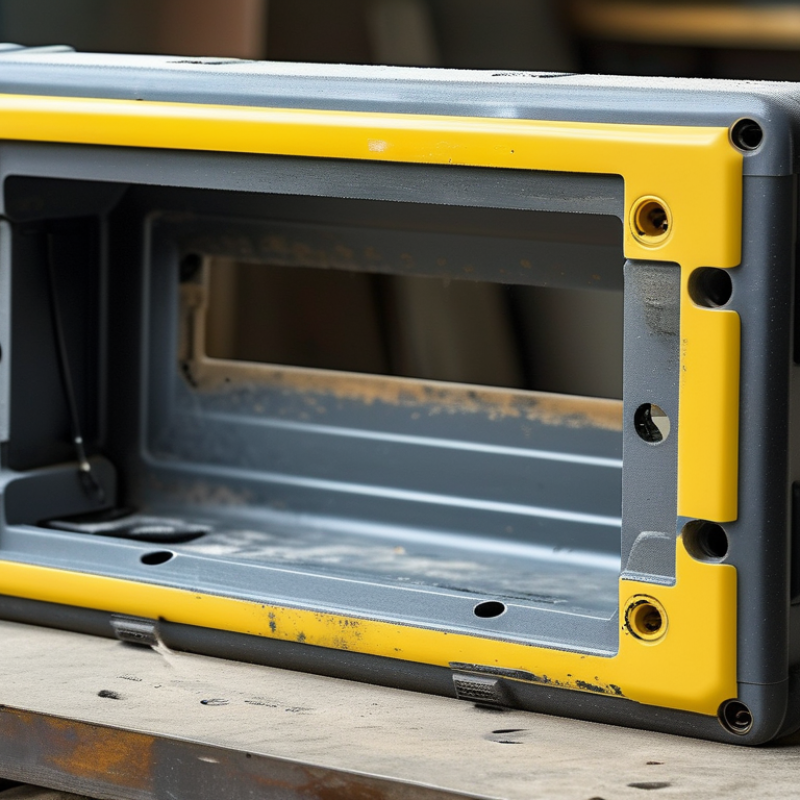
| Design Features Supported | Ribs, bosses, snap-fits, screw posts, ventilation openings, and connector cutouts | Injection molding can integrate multiple functional features into one part, reducing secondary assembly and improving component alignment. |
| Common Applications | Control boxes, instrument housings, sensor covers, electrical accessories, and consumer-device enclosures | ABS is suitable where moderate mechanical protection, attractive appearance, low weight, and efficient repeatable production are required. |



 © Copyright 2020 Tianjin Tanghaidongyang Valve Co., Ltd. All Rights Reserved.