| Ultrasonic Mist Fountain | Piezoelectric transducers convert high-frequency electrical energy into fine water droplets that appear as cool mist. | Clean, low-mineral water is preferred. Hard water can create scale and reduce mist output. | Install the transducer at the specified water depth, keep the control unit dry, and provide a stable water-level system. | Use a low-voltage isolated power supply where required. Prevent dry running, water ingress, and contact with moving or energized parts. | Check electrical safety against the destination-market requirements. Use enclosure protection assessed under IEC 60529 where relevant and verify electromagnetic compatibility requirements. | Indoor displays, decorative bowls, exhibition features, and small architectural water installations. | Confirm input voltage, frequency, plug type, replacement transducer availability, water-quality requirements, and spare-part support. |
| High-Pressure Fog Nozzle Fountain | A high-pressure pump forces water through fine nozzles to produce a dense spray or fog effect. | Filtered water is normally required. Nozzle orifice size determines sensitivity to suspended particles. | Requires a pump, filter, pressure-rated tubing, nozzle layout, drainage, and access for cleaning and maintenance. | Protect users from high-pressure discharge. Include pressure relief, guards, non-slip surfaces, and protection against leaks and hose failure. | Assess the electrical assembly, pump protection, pressure components, hose ratings, grounding, and enclosure ingress protection for the installation environment. | Large outdoor plazas, themed environments, landscape features, and cooling-oriented public installations. | Check operating pressure, flow rate, nozzle material, filtration grade, pump duty cycle, local water regulations, and shipping restrictions for pressure equipment. |
| Air-Assisted Fog Fountain | Compressed air atomizes water into small droplets through a two-fluid nozzle, creating a controllable fog effect. | Filtered water is recommended; compressed air must be dry and reasonably clean to protect the nozzle system. | Needs an air compressor or centralized air supply, regulators, water filtration, drainage, and separate air and water lines. | Control stored pneumatic energy, hose whip, excessive noise, and accidental discharge. Install pressure relief and isolation valves. | Verify electrical safety for compressors and controls, pressure ratings for pneumatic components, grounding, and local machinery or workplace-safety requirements. | Stage effects, visitor attractions, landscape features, and installations requiring adjustable fog density. | Confirm compressor compatibility, air consumption, operating pressure, local noise limits, metric or imperial fittings, and availability of replacement seals. |
| Dry-Ice Fog Fountain | Solid carbon dioxide sublimates in warm water and produces a low-lying fog that stays close to the floor. | Warm water is used in a suitable container. Dry ice must be handled and stored according to supplier and local requirements. | Requires a ventilated area, insulated handling tools, a suitable fog basin, drainage, and controlled access during operation. | Carbon dioxide can accumulate in low or enclosed areas and displace oxygen. Use ventilation, carbon-dioxide monitoring where appropriate, and protective gloves for handling dry ice. | Follow local occupational safety, ventilation, gas-monitoring, event-safety, and pressure-container rules where applicable. Do not seal dry ice in a container. | Short-duration theatrical effects, events, photography, and supervised indoor or outdoor performances. | Check dry-ice availability, transportation rules, storage temperature, event permits, ventilation requirements, and local restrictions on carbon-dioxide use. |
| Heated Water Fog Fountain | Heated water or steam is released and condenses in cooler air, forming a visible vapor or fog effect. | Water quality depends on the heater design; mineral deposits may require descaling or treated water. | Needs thermal insulation, temperature controls, drainage, heat-resistant surfaces, and adequate ventilation. | Protect against burns, hot surfaces, steam exposure, overheating, and dry operation. Install thermostatic control and an independent over-temperature cut-off. | Check applicable heating-appliance, electrical, thermal, grounding, and pressure-safety requirements. Pressure vessels require additional local compliance where applicable. | Indoor architectural features, controlled theatrical displays, and installations requiring warm vapor rather than cold mist. | Confirm rated voltage, heater power, thermal protection, water treatment, insulation requirements, energy consumption, and destination-market certification needs. |
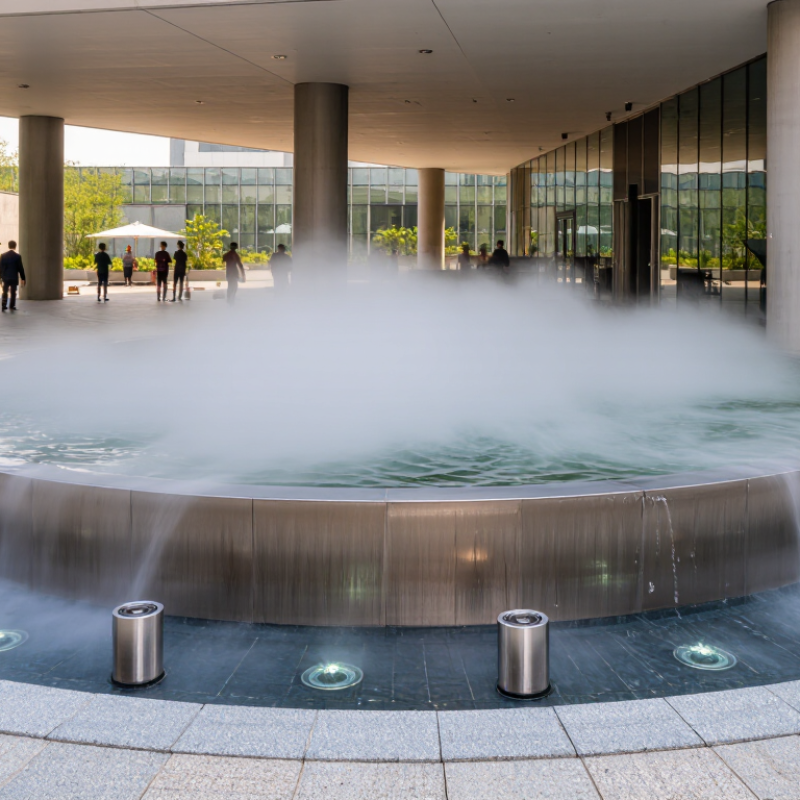
| Waterfall or Spillway Fog Fountain | Fog equipment is integrated with falling or cascading water to combine mist with a visual waterfall effect. | Recirculated water should pass through filtration and require regular cleaning to limit scale and biological growth. | Requires a structural basin, waterproofing, pump and return line, overflow protection, access panels, and coordinated fogger placement. | Manage slip hazards, electrical separation, water stagnation, sharp edges, and safe access for maintenance. Prevent overflow into electrical compartments. | Assess electrical equipment near water, bonding and residual-current protection as required locally, enclosure protection under IEC 60529, and structural drainage design. | Hotels, shopping centers, public landscapes, museums, and architectural water walls. | Review site load limits, drainage capacity, local water use rules, climate exposure, anti-freeze provisions, customs classification, and installation labor requirements. |
| Floating Fog Fountain | A floating platform carries fog modules and sometimes lighting, allowing the effect to operate on a pond or large basin. | Open water may contain sediment or biological contaminants; filtration and routine water treatment are important. | Needs buoyancy calculations, tethering, anti-tilt design, protected cable routing, service access, and a safe shore connection. | Prevent electrical contact with water, unauthorized access, platform instability, cable damage, and entanglement. Consider wind, waves, and public reach zones. | Verify low-voltage design, grounding or isolation strategy, residual-current protection where required, marine or outdoor enclosure protection, and local water-feature rules. | Ponds, resort landscapes, public parks, entertainment venues, and large decorative basins. | Confirm flotation capacity, anchoring method, wind and temperature limits, cable length, water chemistry, transport dimensions, and local environmental permits. |
| Interactive Sensor-Controlled Fog Fountain | Sensors, timers, or control software adjust fog output in response to movement, programmed scenes, or environmental conditions. | Water quality depends on the selected fog technology; filtration and scheduled sanitation are recommended for recirculating systems. | Requires sensors, control cabinets, communication wiring, software configuration, drainage, and protected maintenance access. | Use fail-safe shutdown, emergency stop functions, protected wiring, safe separation from visitors, and cybersecurity controls for networked systems. | Check EMC, electrical safety, machine-control functionality where applicable, ingress protection, wireless-radio requirements, and data-privacy obligations for connected sensors. | Interactive museums, retail environments, public art, visitor attractions, and smart landscape installations. | Confirm language support, communication protocols, software update policy, remote-access security, data handling, technical documentation, and local service capability. |



 © Copyright 2020 Tianjin Tanghaidongyang Valve Co., Ltd. All Rights Reserved.